


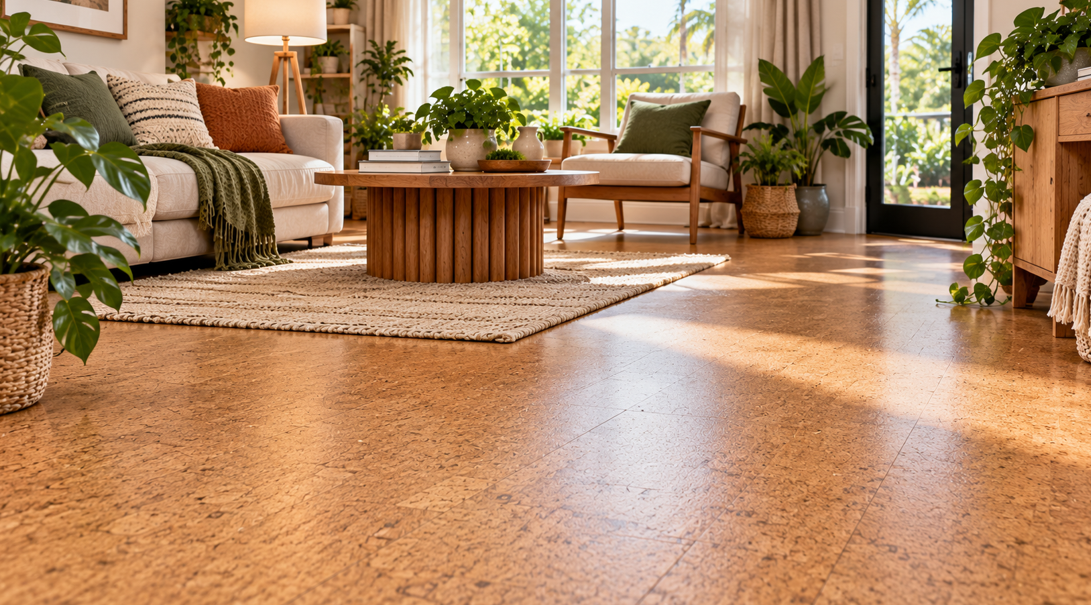
Plant City homeowners have more flooring choices than ever, and one option that often surprises people is cork. Many know cork from wine bottles and bulletin boards, but it has been used as flooring for over a century, and modern cork floors are stylish, comfortable and remarkably practical. At Williford Flooring, we enjoy introducing homeowners to cork because it solves several everyday problems that other floors cannot. If you are new to cork, this beginner's guide covers what it is, how it performs in Florida and where it works best in your home.
What Is Cork Flooring?
Cork comes from the bark of the cork oak tree, which grows mainly around the Mediterranean. The bark is harvested by hand roughly every nine years without cutting down the tree, and the tree regrows its bark for the next harvest. That makes cork one of the most renewable flooring materials available.
The bark is ground, compressed and bonded into sheets, then made into planks or tiles. Most modern cork floors are built like engineered planks, with a cork surface layer, a stable core and a cork backing. Many use click-lock edges for a floating installation.
What Makes Cork Special
Cork's cellular structure is made of millions of tiny air-filled pockets. That structure gives cork its unique benefits:
Comfort underfoot. Cork has a gentle give that cushions every step, making it easier on feet, knees and backs during long periods of standing.
Natural warmth. Cork does not feel cold the way tile does. It stays pleasant to walk on barefoot year-round.
Sound reduction. The air pockets absorb sound, so rooms feel quieter and footsteps do not echo.
Impact resistance. Dropped glasses and dishes are less likely to break, and the floor bounces back from many small dents.
Natural resistance to mold and pests. Cork contains a waxy substance called suberin that helps it resist mold, mildew and insects.
How Cork Handles Plant City's Climate
Humidity is a fair question for any natural floor in Central Florida. Cork is more moisture tolerant than many people expect, thanks to suberin, but it is not a waterproof product. Here is how to set it up for success:
Seal it well. A quality factory finish protects the surface, and some homeowners add a coat of compatible sealer after installation for extra protection.
Test the slab. Most Plant City homes sit on concrete slabs. The slab needs to be tested for moisture and a proper vapor barrier installed under floating cork.
Control indoor humidity. Keep your air conditioning running steadily, aiming for 35 to 55 percent indoor humidity.
Choose the right rooms. Cork shines in living spaces, bedrooms, offices and kitchens. Full bathrooms with daily splashing are usually better served by fully waterproof flooring.
Looks and Styles
Forget the speckled brown cork of decades past. Today's cork floors come in a wide range of colors and patterns, from light natural tones to deep espresso shades. Some products feature a printed wood or stone visual over a cork core, giving you the look of oak or slate with cork's comfort underneath. Others celebrate cork's natural texture in fresh, modern finishes.
You can see our current selection of cork flooring online to explore colors and styles.
Where Cork Works Best
Kitchens are one of the most popular places for cork. Standing at the stove or sink feels noticeably easier, and dropped dishes have a better chance of survival.
Bedrooms and nurseries benefit from cork's quiet, warm surface.
Home offices feel calmer with reduced echo during calls and meetings.
Playrooms and family rooms gain a softer surface for children who sit and play on the floor.
Upstairs rooms in two-story homes benefit from cork's sound absorption, reducing noise for the rooms below.
Caring for Cork
Cork is simple to care for with a few good habits. Sweep or vacuum regularly, since grit can scratch the finish. Damp-mop with a cleaner made for cork or finished wood, and avoid soaking the floor. Use felt pads under furniture, and avoid dragging heavy pieces. Close blinds during the brightest hours, since strong Florida sun can fade cork over time. Depending on traffic, a fresh coat of finish every few years keeps the surface protected.
Is Cork Right for Your Home?
Cork is a great fit if you value comfort, quiet rooms and an eco-friendly material, and if you are willing to give it a little routine care. It may not suit rooms with frequent standing water or households with very large dogs whose claws are hard on most floors. Our team will give you an honest recommendation for each room.
Installed by Our Own Team
Williford never subcontracts. Our in-house installers handle slab testing, vapor barriers and installation, so your cork floor starts its life on solid ground.
Cork and Sustainability
For eco-minded homeowners, cork is one of the most responsible choices available. Harvesting bark does not harm the tree, and cork oak forests absorb large amounts of carbon as they regrow. Much of the material used in cork flooring is also leftover from wine stopper production, so very little goes to waste. Many cork floors carry low-emission certifications as well, which supports healthy indoor air.
Budget and Financing
Cork is generally priced in the mid range, similar to many engineered hardwoods. Total cost depends on the product, room size and slab preparation. Williford offers special financing, subject to credit approval, to help spread the cost over time, making it easier to floor several rooms in one project.
See Cork in Person
Our Lakeland showroom at 4820 Hwy. 98 North is a short drive from Plant City and is open Monday through Friday from 9am to 5pm, with Saturday and evening appointments available. Feel the comfort of cork underfoot, request samples and ask about special financing. Contact our team to learn whether cork flooring is the right choice for your Plant City home.


