


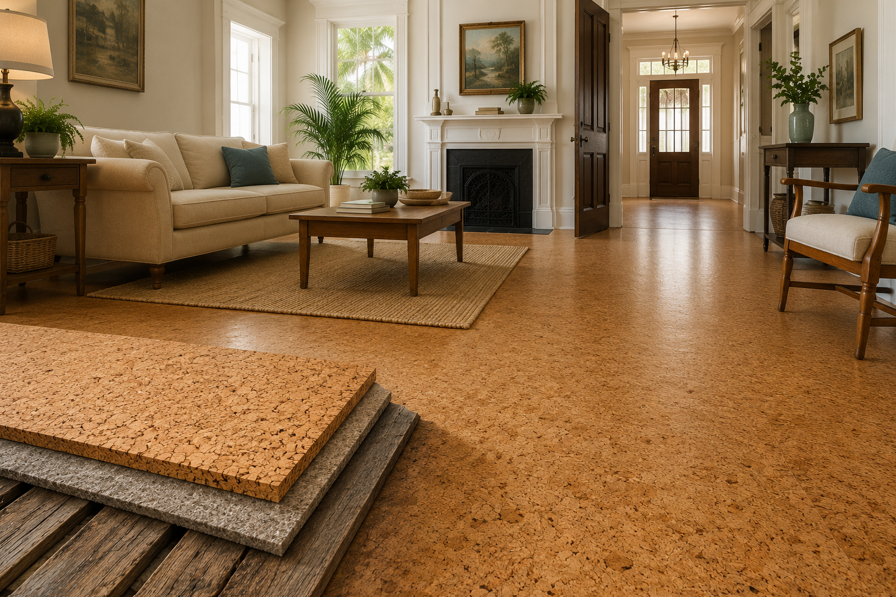
Why Cork Flooring Is Gaining Attention in Bradenton's Older Homes
Older homes have a unique charm that's difficult to replicate. From original architectural details to established neighborhoods and mature landscaping, many homeowners are drawn to the character these properties offer. However, older homes also present flooring challenges that newer homes often don't face.
Uneven subfloors, aging structures, increased noise transmission, and comfort concerns are common issues homeowners encounter during renovation projects. As a result, selecting the right flooring becomes especially important when updating an older property.
One flooring option attracting increased interest among Bradenton homeowners is cork flooring. Known for its natural comfort, sound-absorbing qualities, and distinctive appearance, cork offers features that can work particularly well in older homes.
Unlike many hard-surface flooring materials, cork provides a softer feel underfoot while delivering impressive insulation and acoustic benefits. These characteristics make it an appealing choice for homeowners looking to preserve the character of an older home while improving everyday comfort.
At Williford Flooring Company Inc., homeowners have relied on flooring expertise since 1946. As more homeowners explore sustainable and comfortable flooring solutions, cork continues to stand out as a unique option worth considering.
This guide explores how cork flooring performs in older Bradenton homes, focusing on three key factors that frequently influence renovation decisions: thickness, cushioning, and sound control.
Understanding What Cork Flooring Is
Before examining its performance in older homes, it's helpful to understand what makes cork flooring unique.
Cork flooring is manufactured using bark harvested from cork oak trees. The harvesting process allows the tree to continue growing, making cork one of the most renewable flooring materials available.
The bark contains millions of tiny air-filled cells that give cork its distinctive characteristics.
Natural Cellular Structure
Cork's internal structure creates benefits that are difficult to replicate with many other flooring materials.
These air-filled cells contribute to:
Cushioning
Insulation
Sound absorption
Comfort underfoot
Temperature regulation
This unique composition plays a significant role in how cork performs within older homes.
Available Cork Flooring Formats
Today's cork flooring products are available in several styles.
Common options include:
Cork planks
Cork tiles
Floating cork flooring
Glue-down cork flooring
Many products feature modern finishes and designs that complement both traditional and contemporary interiors.
Why Homeowners Often Overlook Cork
Although cork offers numerous benefits, it sometimes receives less attention than hardwood, luxury vinyl, or waterproof flooring.
Many homeowners simply aren't familiar with how much cork flooring has evolved in recent years.
Modern cork products provide attractive visuals while maintaining the natural performance benefits that have made cork popular for decades.
Why Older Homes Have Unique Flooring Challenges
Flooring decisions in older homes often require additional planning compared to newer construction.
Uneven Subfloors
Over time, homes naturally settle.
Older properties may develop slight variations in floor level that become noticeable during renovation projects.
Certain flooring materials are less forgiving than others when installed over minor imperfections.
Increased Noise Transfer
Many older homes were built before modern sound-control practices became common.
This can lead to:
Footstep noise
Echoing
Room-to-room sound transfer
Staircase noise
Reducing these distractions often becomes a priority during flooring upgrades.
Comfort Concerns
Traditional hardwood and tile floors can feel firm underfoot, especially in homes where residents spend significant time standing or walking.
Comfort becomes increasingly important for many households, particularly in kitchens, living spaces, and bedrooms.
Florida Climate Considerations
Bradenton homeowners must also account for humidity, temperature fluctuations, and seasonal weather patterns when selecting flooring materials.
These environmental factors influence flooring performance over time.
How Cork Flooring Thickness Affects Performance
One of the most important considerations when evaluating cork flooring is thickness.
Thickness directly influences comfort, sound absorption, insulation, and overall feel.
Understanding Cork Thickness Options
Cork flooring products are available in varying thickness levels depending on the manufacturer and product category.
Generally speaking, thicker cork products provide enhanced performance in several key areas.
Additional Cushioning Benefits
Thicker cork floors often feel more comfortable underfoot.
The added material helps absorb impact and creates a softer walking surface compared to many traditional hard-surface flooring products.
This can be particularly valuable in older homes where subfloor conditions may contribute to a firmer feel.
Improved Acoustic Performance
Thickness often contributes to better sound reduction.
Additional cork material helps absorb vibrations and minimize the transmission of noise between rooms.
Enhanced Thermal Insulation
Cork's natural insulating properties can become even more noticeable with increased thickness.
This may contribute to improved comfort throughout the year.
The Cushioning Advantage of Cork Flooring
One of cork's most celebrated features is its natural cushioning effect.
For many homeowners, this characteristic alone differentiates cork from other flooring options.
Softer Underfoot Than Traditional Hard Surfaces
Unlike ceramic tile or some hardwood installations, cork compresses slightly under pressure before returning to its original shape.
This flexibility creates a more comfortable walking experience.
Everyday Comfort for Active Households
Households spend countless hours standing in kitchens, hallways, and living areas.
Cork's natural resilience can help reduce fatigue during everyday activities.
This benefit often becomes more noticeable over time as homeowners experience the flooring daily.
Comfort for Multi-Generational Homes
Many older Bradenton homes are occupied by multiple generations of family members.
The softer feel of cork may appeal to:
Young children
Older adults
Individuals seeking greater walking comfort
Homeowners who spend significant time on their feet
Reduced Impact on Joints
While flooring cannot solve medical concerns, many homeowners appreciate the softer feel cork provides compared to harder flooring surfaces.
The cushioning effect often contributes to an overall sense of comfort throughout the home.
How Cork Flooring Helps Control Sound in Older Homes
Sound control remains one of cork flooring's strongest advantages.
Many homeowners first begin researching flooring options through resources like Williford Flooring Company Inc. after becoming frustrated with household noise issues.
Absorbing Footstep Noise
Cork naturally absorbs impact sound more effectively than many hard-surface flooring materials.
This can help reduce the noise associated with everyday movement throughout the home.
Limiting Echoes Within Rooms
Hard surfaces can reflect sound waves, contributing to echoes and increased noise levels.
Cork's softer composition helps absorb sound rather than reflect it.
This often creates a quieter and more comfortable environment.
Supporting Upstairs Living Areas
In two-story homes, sound transfer between floors can become a significant concern.
Cork's acoustic properties can help minimize some of the noise associated with footsteps and daily activity.
Improving Everyday Comfort
A quieter home often feels more relaxing and inviting.
Many homeowners appreciate the subtle but noticeable difference cork can make in reducing common household sounds.
Design Benefits of Cork in Historic and Older Homes
Performance is important, but appearance matters too.
Fortunately, today's cork flooring offers far more design flexibility than many homeowners expect.
Natural Warmth and Character
Cork's organic appearance complements many architectural styles found throughout Bradenton.
Its natural texture adds visual warmth without overwhelming existing design elements.
Modern Cork Designs
Manufacturers now offer cork flooring in a wide variety of styles.
Options may include:
Contemporary neutrals
Wood-inspired visuals
Coastal-inspired tones
Traditional cork patterns
Modern minimalist finishes
Complementing Original Home Features
Many homeowners seek flooring that respects the character of an older property.
Cork can work beautifully alongside:
Original trim work
Historic moldings
Traditional layouts
Classic architectural details
Flexible Interior Design Applications
Cork adapts well to numerous interior styles, making it easier to blend old and new design elements throughout the home.
Practical Considerations Before Installing Cork Flooring
Every flooring product has strengths and considerations.
Understanding both helps homeowners make informed decisions.
Room Selection Matters
Cork performs particularly well in:
Living rooms
Bedrooms
Home offices
Dining areas
Kitchens
The best location depends on household needs and product specifications.
Maintenance Expectations
Modern cork flooring is generally straightforward to maintain.
Routine care often includes:
Sweeping
Vacuuming
Damp mopping as recommended by the manufacturer
Proper maintenance helps preserve appearance and performance.
Professional Installation Supports Success
Installation quality influences long-term performance regardless of flooring type.
Homeowners exploring comfortable flooring alternatives often compare different styles of cork flooring to determine which products best suit their renovation goals.
Professional installation helps ensure proper preparation, fit, and long-term durability.
Product Selection Is Important
Not all cork flooring products are identical.
Factors such as thickness, finish systems, construction methods, and warranty coverage can influence performance.
Is Cork Flooring a Good Fit for Your Bradenton Home?
Cork flooring offers a unique combination of features that can be particularly valuable in older homes.
Homeowners may find cork especially appealing if they prioritize:
Walking comfort
Sound reduction
Sustainability
Insulation benefits
Distinctive design character
Older homes often present challenges related to noise, comfort, and uneven surfaces. Cork's natural properties help address many of these concerns while providing an attractive flooring solution.
However, the right flooring choice ultimately depends on individual goals, lifestyle needs, and renovation priorities.
Why More Bradenton Homeowners Are Considering Cork Flooring
As homeowners continue searching for flooring solutions that balance beauty, comfort, and practicality, cork flooring continues to gain attention throughout Bradenton.
Its combination of cushioning, sound absorption, insulation, and visual appeal makes it particularly well suited to many older homes.
The ability to improve everyday comfort while maintaining design flexibility helps explain why cork remains a compelling option for renovation projects.
If you'd like personalized guidance on whether cork flooring is the right fit for your home, reach out to us and speak with our experienced flooring professionals.
For homeowners seeking a flooring solution that feels comfortable, performs quietly, and complements the character of an older property, cork flooring is well worth exploring.


