


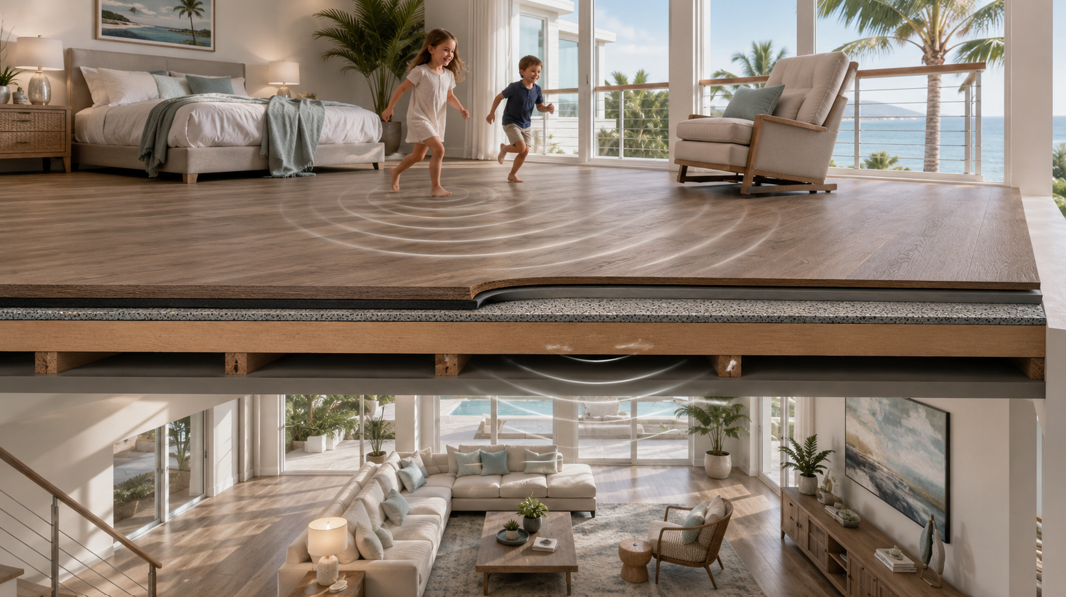
Why Sound Travels So Easily Between Floors
A multi-story home can provide valuable space and privacy, but it can also create one common frustration: noise moving from one level to another.
Footsteps in an upstairs hallway may sound much louder in the room below. A dropped toy can interrupt a home office meeting. Chairs scraping across a dining area may be heard in a downstairs bedroom, and active pets or children can make an upper floor feel surprisingly noisy.
Bradenton homes face the same everyday sound challenges as multi-story properties elsewhere, but Florida construction styles, hard interior surfaces, open layouts, and active indoor-outdoor living can make noise control an especially useful part of a flooring remodel.
Luxury vinyl can help reduce some of that sound when it is selected and installed as part of a complete flooring system. The flooring’s construction, thickness, backing, underlayment, subfloor preparation, and installation method all influence the result.
It is important to set realistic expectations. Luxury vinyl does not create a completely silent room, and flooring alone cannot block every sound moving through a building. However, the right product can soften footfall, reduce the sharp impact of dropped objects, and make upstairs rooms feel more comfortable.
Williford Flooring Company Inc. has helped Florida homeowners choose and install flooring since 1946. Its knowledgeable team can compare flooring construction, acoustic features, room conditions, and installation requirements. Every project is completed by the company’s trusted in-house installation team rather than subcontractors, helping support consistent workmanship from preparation through completion.
Understanding the Two Main Types of Household Noise
Before choosing flooring, it helps to understand what type of sound is causing the problem. Noise between floors usually falls into two broad categories: impact noise and airborne noise.
Impact Noise
Impact noise begins when an object or person makes direct contact with a surface.
Common examples include:
Footsteps
Shoes striking the floor
Children running or jumping
Pet claws
Furniture being moved
Dropped toys
Exercise equipment
Laundry baskets placed on the floor
Doors closing against nearby structures
This vibration moves through the floor and building materials. It may then be heard in the ceiling or walls of the room below.
Luxury vinyl flooring can be particularly useful for reducing the harshness of impact noise. A resilient surface, attached backing, or approved acoustic underlayment can absorb part of the energy before it travels through the structure.
Airborne Noise
Airborne noise travels through the air before passing through floors, ceilings, walls, doors, vents, and other openings.
Examples include:
Conversations
Television sound
Music
Barking dogs
Video calls
Home theater systems
Kitchen appliances
Flooring can contribute to a quieter environment by reducing echo and limiting hard-surface reflection, but airborne sound usually requires a broader approach. Ceiling insulation, wall construction, sealed openings, doors, and room furnishings may all affect how much noise travels.
Why the Difference Matters
A homeowner who mainly hears upstairs footsteps needs a different solution from someone who can clearly hear conversations through the ceiling.
Luxury vinyl may make a noticeable difference with impact noise. It may also make rooms feel less echoey, especially when compared with a hard, reflective surface. However, it cannot replace insulation or structural sound-control work when airborne noise is the primary concern.
How Luxury Vinyl Helps Reduce Impact Sound
Luxury vinyl has several qualities that can support a quieter floor.
A More Resilient Surface
Tile, stone, and some hard flooring materials create a sharp sound when shoes or objects strike the surface. Luxury vinyl has a slightly more resilient feel, which can soften the initial impact.
That softer response can reduce the clicking, tapping, or hollow sound associated with harder surfaces.
The effect varies by product. Thin flooring installed directly over a hard subfloor may sound different from a thicker rigid-core plank with acoustic backing.
Layered Product Construction
Luxury vinyl is not a single sheet of printed material. Many products contain several layers that work together, including:
A protective wear layer
A printed design layer
A vinyl or rigid core
A stabilizing layer
An attached backing on selected products
These layers can influence how sound and vibration move through the floor.
A thicker product is not automatically the quietest, but layered construction can provide more acoustic control than a basic thin surface covering.
Attached Acoustic Backing
Some luxury vinyl products include an attached pad or backing made from foam, cork, or another acoustic material.
This backing can:
Cushion footsteps
Reduce the hollow sound of a floating floor
Soften contact between the plank and subfloor
Improve comfort underfoot
Help limit impact vibration
Attached backing also simplifies the flooring system because the acoustic layer is already part of the plank. However, homeowners need to confirm whether additional underlayment is approved. Adding an unapproved layer can make the floor too flexible and place pressure on the locking joints.
Approved Underlayment
When a luxury vinyl product does not include attached backing, an approved acoustic underlayment may be installed beneath it.
Underlayment creates a separation layer between the finished floor and subfloor. Depending on its construction, it may support sound reduction, comfort, moisture management, or minor subfloor smoothing.
Not every underlayment works with every luxury vinyl product. Thickness, density, compressibility, and warranty requirements all need to match the flooring manufacturer’s instructions.
Acoustic Ratings Homeowners May See
Flooring products and underlayments may include acoustic ratings. These figures can help with comparison, but they need context.
Impact Insulation Class
Impact Insulation Class, often shortened to IIC, relates to impact sound transmission through a floor-and-ceiling assembly.
A higher figure generally indicates better performance in the tested assembly. However, the number does not describe the flooring product in isolation.
The test result may depend on:
The type and thickness of the concrete or wood structure
Ceiling materials
Insulation
Suspended ceiling systems
Flooring
Underlayment
Installation method
A product tested over a thick concrete assembly may not achieve the same result over a wood-framed residential floor.
Delta IIC
Delta IIC describes the improvement created by a flooring or underlayment system compared with the same base structure without that product.
This rating can be useful when comparing the acoustic contribution of flooring systems.
It still needs to be read carefully. Test conditions may differ between manufacturers, so two published numbers are not always directly comparable.
Sound Transmission Class
Sound Transmission Class, or STC, relates more closely to airborne sound moving through a wall or floor-and-ceiling assembly.
An STC rating may help homeowners understand how the complete structure manages voices, televisions, and other airborne noise.
Luxury vinyl can contribute to the assembly, but insulation, ceilings, joists, gaps, and structural design often play a larger role in controlling airborne sound.
Ask for the Complete Test Details
A high number on a product label can look impressive, but homeowners may want to ask:
What type of structure was tested?
Was the test conducted over concrete or wood framing?
Did the assembly include a suspended ceiling?
Was insulation installed between floors?
Did the flooring have attached backing?
Was separate underlayment included?
Does the result apply to the planned installation method?
A flooring specialist can help determine whether a rating is relevant to the home rather than simply comparing the largest number.
Choosing a Quieter Luxury Vinyl Product
Several product features influence how luxury vinyl sounds and feels in a multi-story home.
Product Thickness
Thicker luxury vinyl may feel more substantial and can sometimes create a quieter walking surface. It may also include a thicker core or backing.
Thickness alone does not guarantee acoustic performance. A thick but highly rigid product installed over an uneven subfloor may still produce clicking or hollow sounds.
The entire construction matters more than one measurement.
Core Type
Luxury vinyl may use a flexible vinyl construction or a rigid core.
Rigid-core products can provide stability and help bridge minor subfloor imperfections within approved limits. Some also include dense acoustic backing.
Different core types produce different sounds underfoot. A flooring professional can compare samples and product specifications to help homeowners understand the difference.
Backing Material
Foam and cork are among the backing materials commonly found on luxury vinyl products.
A dense backing may provide better support than a soft, highly compressible pad. The goal is to create cushioning without allowing excessive movement at the joints.
Plank and Tile Format
Plank dimensions and construction can affect how the floor responds to foot traffic.
Long, wide planks can create a clean appearance, but they need a suitably flat subfloor. Uneven areas may allow movement that creates noise.
Luxury vinyl tile can also provide sound benefits while offering stone, concrete, or patterned visuals.
Installation Method
Luxury vinyl may be installed as a floating floor or adhered directly to the subfloor.
A floating floor sits over the prepared surface and connects through locking joints. Acoustic backing or underlayment can help soften sound.
Glue-down flooring creates more direct contact with the subfloor. It may sound firm and stable, though the complete floor-and-ceiling assembly still determines how much impact noise reaches the room below.
Neither method is automatically quieter in every home. The building structure, product, underlayment, and installation quality all matter.
Why Subfloor Preparation Affects Sound
A quiet flooring system begins below the visible surface.
Flatness Reduces Movement
A subfloor with low spots or raised areas may allow floating planks to flex underfoot. That movement can create clicking, tapping, or a hollow response.
It may also place unnecessary pressure on locking joints.
Before installing luxury vinyl flooring, the subfloor may need to be evaluated for flatness and repaired according to the product’s requirements.
Preparation may involve:
Filling low areas
Smoothing raised sections
Removing adhesive residue
Securing loose wood panels
Repairing damaged sections
Cleaning dust and debris
Addressing cracks
Checking moisture conditions
Loose Wood Subfloors Can Squeak
In a wood-framed multi-story home, squeaks may come from subfloor panels moving against fasteners or floor joists.
Installing new flooring over an existing squeak does not necessarily remove the underlying cause. Loose areas may need to be identified and secured before the new floor is installed.
Clean Surfaces Support Better Contact
Debris beneath a floating floor can create raised points or crunching sounds. Adhesive residue may prevent glue-down flooring from bonding evenly.
Thorough surface preparation supports both acoustic comfort and long-term flooring performance.
Moisture Conditions Still Matter
Bradenton’s humid climate makes moisture evaluation an important part of flooring preparation.
Upper floors may be less exposed to concrete-slab moisture, but bathrooms, laundry rooms, air-conditioning systems, exterior doors, and plumbing can still create moisture concerns.
The selected product and underlayment need to suit the room’s conditions and follow manufacturer requirements.
Where Luxury Vinyl Can Make the Biggest Difference
Luxury vinyl may provide useful sound benefits throughout a multi-story home, but some spaces gain more than others.
Upstairs Hallways
Hallways carry repeated foot traffic and often sit above bedrooms, offices, or living areas.
A quieter flooring system can soften the sound of early-morning footsteps, children moving between rooms, and pets walking across the upper level.
Bedrooms
Luxury vinyl can create a clean, easy-care bedroom floor while reducing the sharp sound associated with harder surfaces.
Area rugs can provide additional softness beside beds or in play areas without covering the entire floor.
Children’s Rooms and Playrooms
Dropped toys, running, jumping, and moving furniture create impact noise.
Luxury vinyl with suitable backing can make these spaces more comfortable, but active play may still be heard below. Rugs and padded play mats can provide additional control in the busiest zones.
Home Offices
A home office may create noise through rolling chairs, footsteps, and frequent movement.
Luxury vinyl can support smooth chair movement while offering a less reflective surface than tile. A suitable chair mat may protect the wear layer and reduce repetitive rolling noise.
Upstairs Laundry Areas
Luxury vinyl is often considered for laundry spaces because many products offer strong moisture performance and easy cleaning.
Acoustic flooring can reduce everyday footfall, but it cannot correct an unbalanced or poorly installed washing machine. Appliance vibration may require leveling, maintenance, isolation pads, or structural evaluation.
Multi-Purpose Loft Areas
Lofts may be used for television, exercise, study, gaming, or family activities. These uses create a mix of impact and airborne noise.
Luxury vinyl can form one part of the solution, while rugs, upholstered furniture, curtains, and thoughtful equipment placement help control the rest.
How Rugs and Furnishings Work With Luxury Vinyl
Flooring does not need to handle sound control alone.
Area Rugs
Area rugs absorb impact and reduce reflected sound. They are especially useful in:
Play areas
Bedside spaces
Seating groups
Hallway sections
Home offices
Exercise corners
A rug pad can add further cushioning, provided its material is approved for use over the luxury vinyl finish.
Some rubber or latex backings may react with certain flooring products, so manufacturer guidance matters.
Upholstered Furniture
Sofas, padded chairs, fabric headboards, and benches absorb more sound than hard furniture.
They can reduce echo within the upstairs room, which may make conversations, television, and music feel less sharp.
Curtains and Fabric Shades
Large windows reflect sound. Curtains and fabric window treatments help soften the room while supporting privacy and light control.
Bookcases and Wall Décor
Books, framed textiles, acoustic artwork, and other irregular surfaces can break up reflections.
These features are more helpful with airborne sound and echo than with direct footfall vibration, but they contribute to a more comfortable room.
Common Soundproofing Mistakes to Avoid
Homeowners often spend more than necessary when the source of the noise has not been clearly identified.
Assuming Thick Flooring Solves Every Problem
A thick plank may feel quieter, but product thickness is only one factor.
Core density, backing, underlayment, subfloor flatness, room furnishings, and the structure between floors all affect the result.
Adding Extra Underlayment Without Approval
More cushioning may sound like a better solution, but excessive softness can allow planks to move.
That movement may create noise, weaken locking joints, or affect warranty coverage.
Use only the type and thickness of underlayment approved for the selected product.
Installing Over Existing Squeaks
New flooring may cover the old surface visually without correcting loose subfloor panels or moving structural components.
The source of a squeak may need to be addressed before installation.
Expecting Flooring to Block Voices Completely
Flooring is generally more effective at reducing impact noise than stopping conversations, music, or television sound.
Airborne noise may require work within the ceiling, walls, doors, or floor structure.
Comparing Ratings Without Comparing Test Assemblies
An acoustic rating obtained over concrete with insulation and a suspended ceiling cannot automatically predict performance over a basic wood-framed floor.
The full test method needs to resemble the planned installation.
Ignoring the Room Below
Sound control is about the relationship between two spaces.
A playroom above a garage creates different concerns from a bedroom above a home office. The use of both rooms helps determine how much acoustic improvement is needed.
Luxury Vinyl Compared With Other Flooring for Noise
Each flooring category creates a different sound and feel.
Luxury Vinyl vs. Tile
Tile is dense, hard, and reflective. Footsteps and dropped objects often sound sharper, and the room may have more echo.
Luxury vinyl generally feels softer and quieter underfoot. Attached backing or underlayment may further reduce impact sound.
Luxury Vinyl vs. Hardwood
Hardwood can produce a solid, natural sound, but shoes, pet claws, and furniture movement may be noticeable.
Luxury vinyl may reduce some of that sharp contact sound, especially when installed with acoustic backing.
Hardwood performance also depends on whether it is nailed, glued, or floated and what lies beneath it.
Luxury Vinyl vs. Carpet
Carpet usually offers stronger impact-sound absorption because its fibres and padding cushion footsteps.
Luxury vinyl provides easier cleaning, better resistance to many spills, and a hard-surface appearance. Rugs can be added to selected areas where extra sound absorption is needed.
Luxury Vinyl vs. Laminate
Laminate flooring can sound hollow when installed as a floating system without suitable acoustic support.
Modern laminate and luxury vinyl products vary widely. Comparing the actual core, backing, underlayment, and acoustic test data is more useful than comparing category names alone.
Questions to Ask Before Selecting Acoustic Flooring
A thoughtful conversation with a flooring specialist can prevent unrealistic expectations and help identify the best product for the property.
Useful questions include:
Is impact noise or airborne noise the main concern?
What type of subfloor is present?
Is the home wood-framed, concrete, or a combination?
Does the flooring include attached acoustic backing?
Is separate underlayment permitted?
Which IIC or Delta IIC results are available?
What assembly was used during testing?
Is the product approved for upstairs installation?
Does the room have moisture concerns?
Will the floor be floated or glued down?
Are there existing squeaks or uneven areas?
What rooms are located directly below?
Are rugs or other acoustic furnishings planned?
Does the product warranty include specific underlayment requirements?
The answers help turn a general request for “soundproof flooring” into a realistic plan.
Building a Quieter Multi-Story Home
A quieter floor usually comes from several small improvements working together.
Luxury vinyl can soften footsteps, reduce the sharp impact of everyday movement, and limit some of the echo associated with harder flooring. Products with acoustic backing or approved underlayment may provide additional support.
Careful subfloor preparation is equally important. Flat, clean, secure surfaces help prevent movement, clicking, and hollow sounds. Professional installation ensures that the selected flooring, backing, underlayment, and expansion details work as a complete system.
Rugs, fabric furnishings, curtains, and thoughtful room layouts can then build on the flooring’s acoustic benefits.
For severe airborne noise or structural vibration, a flooring update may need to be combined with ceiling insulation, resilient channels, acoustic panels, sealing work, or advice from a qualified building professional.
Williford Flooring Company Inc. can help Bradenton homeowners compare luxury vinyl products based on appearance, comfort, acoustic features, room use, and installation requirements. Its dedicated in-house installation team provides consistent service from the first assessment through the finished floor.
To discuss a quieter flooring solution for your multi-story home, get in touch with the local flooring specialists.


