


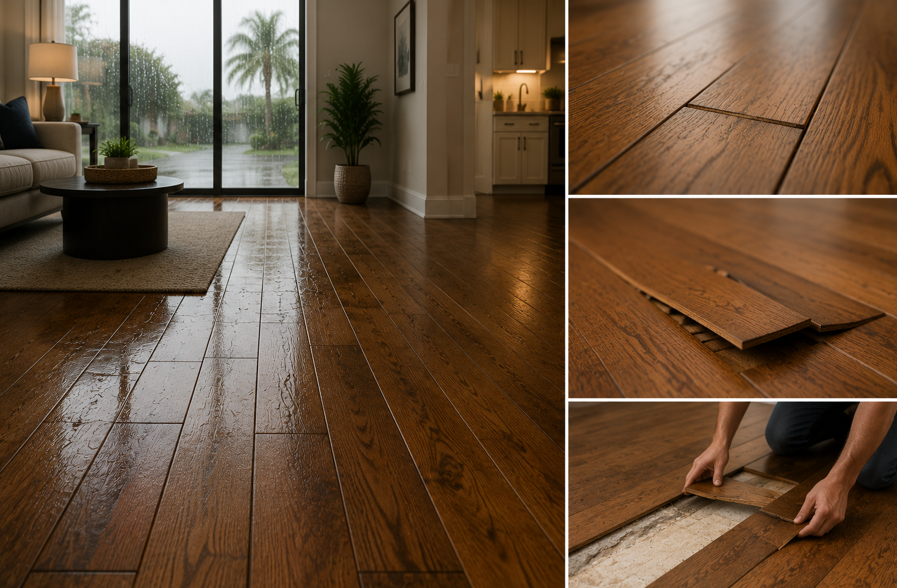
Why Florida Rainstorms Can Affect Hardwood Floors
Florida homeowners love hardwood flooring for its warmth, timeless appearance, and natural character. But in places like Plant City, heavy rainstorms and high humidity can create conditions that put extra stress on wood flooring systems.
Hardwood naturally reacts to moisture. During Florida’s rainy season, increased humidity levels can cause wood planks to expand. When moisture exposure becomes excessive or uneven, homeowners may start noticing issues like gaps, cupping, or buckling.
These flooring problems can feel frustrating at first, especially when beautiful hardwood floors suddenly appear uneven or damaged. The good news is that many moisture-related flooring issues can often be improved or corrected with the right approach.
At Williford Flooring Company Inc., homeowners throughout Central Florida can work with experienced flooring professionals who understand how Florida’s climate affects hardwood flooring over time. Since 1946, the company has helped homeowners maintain, restore, and install hardwood floors designed for long-term performance.
Understanding why hardwood reacts to moisture is the first step toward protecting your floors after severe rainstorms or periods of high humidity.
Understanding the Difference Between Gaps, Cupping & Buckling
Many homeowners notice changes in their flooring but aren’t always sure what type of issue they’re seeing. Gaps, cupping, and buckling may all involve movement in hardwood planks, but each problem develops differently.
What Are Hardwood Floor Gaps?
Gaps appear when spaces form between hardwood planks.
These gaps may happen because:
Indoor humidity drops suddenly
Wood shrinks during drier periods
Seasonal expansion and contraction occur naturally
Flooring acclimation was incomplete before installation
Small seasonal gaps can sometimes be normal in hardwood flooring. Larger or persistent gaps, however, may signal moisture imbalance or installation concerns.
What Is Cupping?
Cupping occurs when the edges of hardwood planks rise slightly higher than the center.
This often happens when:
Excess moisture affects the underside of the flooring
Humidity levels remain elevated for long periods
Moisture imbalance develops between the top and bottom of the planks
Cupped flooring may feel uneven while walking across it, and the edges of the boards often become visibly raised.
What Is Buckling?
Buckling is usually the most severe moisture-related hardwood issue.
Buckling may cause:
Boards lifting away from the subfloor
Significant warping
Flooring separation
Visible raised sections
This typically happens after substantial moisture exposure, flooding, or prolonged humidity problems.
Understanding which condition is affecting the floor helps determine the best repair approach.
Why Plant City’s Climate Creates Hardwood Challenges
Plant City homeowners deal with climate conditions that can be particularly demanding on hardwood flooring.
Florida’s environment often includes:
High humidity levels
Frequent summer rainstorms
Sudden moisture fluctuations
Wet shoes and outdoor moisture
Storm-related indoor humidity spikes
Wood naturally absorbs and releases moisture from the surrounding air. During periods of heavy humidity, hardwood planks may absorb excess moisture and expand.
When moisture exposure becomes uneven, visible flooring movement can occur.
Common Moisture Sources Inside Florida Homes
Many homeowners assume rainwater itself is the only concern, but indoor moisture sources also play a major role.
Moisture may come from:
Open windows during storms
HVAC inefficiencies
Appliance leaks
Crawlspace humidity
Wet entryways
Poor ventilation
Roof leaks after storms
Even small moisture issues can gradually affect hardwood flooring if they remain unresolved for long periods.
That’s why moisture management becomes one of the most important parts of protecting hardwood floors in Florida homes.
First Steps to Take After Noticing Hardwood Floor Damage
When homeowners first notice gaps, cupping, or buckling, quick action often helps reduce additional damage.
Step 1: Identify Any Active Moisture Source
Before attempting repairs, homeowners should first determine whether moisture is still entering the space.
Check for:
Plumbing leaks
Roof leaks
Window leaks
Flooding signs
Damp subfloors
HVAC condensation issues
If moisture continues affecting the flooring, cosmetic repairs alone typically won’t solve the underlying problem.
Step 2: Stabilize Indoor Humidity
Humidity control becomes especially important after rainstorms.
Homeowners often benefit from:
Running air conditioning consistently
Using dehumidifiers
Improving airflow
Drying damp areas quickly
Keeping indoor humidity more stable
Rapid humidity swings can worsen hardwood movement.
Step 3: Avoid Immediate Sanding
One mistake homeowners sometimes make is sanding cupped flooring too quickly.
Hardwood floors may partially normalize once moisture levels stabilize. Sanding too early can permanently affect plank shape if the boards later return closer to their original position.
Professional evaluation often helps determine whether the flooring needs time to settle before repairs begin.
How to Fix Small Hardwood Floor Gaps
Not all hardwood floor gaps require major repair work. In many cases, small seasonal gaps naturally improve as humidity levels change throughout the year.
When Small Gaps Are Usually Normal
Minor spacing between planks may occur because wood naturally expands and contracts seasonally.
Small gaps are often less concerning when:
They appear during drier months
They remain narrow
They close partially over time
No moisture damage is visible
When Gaps May Need Professional Attention
Larger or persistent gaps may require evaluation if:
The spacing continues growing
Boards feel loose
Moisture exposure occurred recently
Subfloor movement is suspected
Flooring installation issues exist
Professional repair solutions may include:
Humidity correction
Board replacement
Wood fillers in select situations
Re-securing loose planks
Addressing subfloor concerns
Proper diagnosis matters because fixing the visible gap without addressing moisture conditions may allow the issue to return.
How Cupped Hardwood Floors Are Typically Repaired
Cupping is one of the most common moisture-related hardwood issues seen in humid climates.
The good news is that moderate cupping can sometimes improve once moisture levels stabilize.
Moisture Stabilization Comes First
The first repair step usually involves controlling moisture and humidity inside the home.
This may include:
Drying wet areas
Improving ventilation
Using dehumidification
Addressing hidden leaks
Allowing the flooring time to stabilize
In some situations, hardwood planks may flatten partially as conditions normalize.
Sanding & Refinishing After Stabilization
If cupping remains after moisture levels stabilize, professional sanding and refinishing may help restore the floor’s appearance.
This process often involves:
Leveling uneven plank edges
Refinishing the hardwood surface
Restoring visual consistency
Because sanding removes part of the wood surface, experienced flooring professionals carefully evaluate whether the floor is fully dry before beginning refinishing work.
Why Timing Matters
Patience matters with cupped hardwood flooring. Floors that are refinished too early may later develop reverse problems if the boards continue shifting while drying.
Professional moisture testing helps determine the right timing for repairs.
What to Do If Hardwood Floors Begin Buckling
Buckling usually signals more severe moisture exposure and often requires faster intervention.
Signs of Buckling
Buckled flooring may:
Lift dramatically upward
Separate from the subfloor
Feel unstable underfoot
Create raised sections throughout the room
This type of damage commonly develops after:
Flooding
Major leaks
Storm-related water intrusion
Long-term moisture buildup
Why Immediate Action Helps
When buckling appears, homeowners benefit from addressing the problem quickly because prolonged moisture exposure may affect:
Subfloors
Adhesives
Structural materials
Indoor air quality
Common Buckling Repair Approaches
Depending on severity, repairs may involve:
Moisture remediation
Board replacement
Subfloor drying
Reinstallation of damaged sections
Full refinishing
Structural corrections
Some isolated sections may be repairable without replacing the entire floor. In more severe situations, larger restoration work may become necessary.
Professional inspection helps determine the most practical and cost-effective solution.
Why Professional Moisture Testing Matters
One of the most important parts of hardwood floor repair in Florida is moisture testing.
Visible flooring damage doesn’t always reveal how much moisture remains beneath the surface.
Professional moisture testing helps identify:
Subfloor moisture levels
Hidden moisture pockets
Ongoing humidity concerns
Areas requiring additional drying
Without proper testing, repairs may begin before the flooring system fully stabilizes.
Florida Homes Often Require More Careful Evaluation
Homes in humid climates may experience moisture-related flooring problems differently than homes in drier regions.
That’s especially true in:
Ground-floor rooms
Older homes
Concrete slab homes
Rooms near exterior doors
Areas affected by storm runoff
Experienced flooring specialists understand how Florida weather patterns affect hardwood flooring systems and how to approach repairs carefully.
Preventing Future Hardwood Floor Problems During Rainy Season
While no flooring is completely immune to moisture, several preventative steps can help reduce the likelihood of future hardwood issues.
Maintain Stable Indoor Humidity
Consistent indoor humidity often helps reduce excessive wood movement.
Many homeowners benefit from:
Running HVAC systems consistently
Using dehumidifiers during rainy months
Avoiding prolonged indoor dampness
Clean Up Moisture Quickly
Standing water should never remain on hardwood floors for long periods.
Quick cleanup matters after:
Storm-related leaks
Appliance overflows
Pet accidents
Wet shoes near entryways
Use Protective Mats Near Entrances
Entry mats help reduce:
Rainwater tracking
Mud buildup
Excess surface moisture
This simple step often helps during Florida’s heavy summer storms.
Schedule Professional Flooring Inspections
Occasional professional evaluations may help identify:
Minor moisture issues
Early plank movement
Subfloor concerns
Areas needing maintenance
Addressing small issues early can sometimes prevent larger repairs later.
Why Hardwood Still Remains a Great Flooring Choice in Florida
Despite Florida’s humid climate, hardwood flooring continues to remain one of the most desirable flooring choices for many homeowners.
Today’s hardwood flooring options offer impressive durability, timeless design appeal, and long-term value when properly maintained.
Many Plant City homeowners still prefer hardwood because it provides:
Natural warmth
Elegant appearance
Long-lasting beauty
Design flexibility
Strong resale appeal
The key is understanding how to care for hardwood properly in Florida’s climate and working with flooring professionals who understand local moisture conditions.
With proper installation, humidity management, and occasional maintenance, hardwood floors can continue looking beautiful for many years.
Restoring Hardwood Floors After Florida Rainstorms
Hardwood floor gaps, cupping, and buckling may feel overwhelming at first, but many moisture-related flooring issues can often be improved with the right approach.
The most important step is identifying and correcting moisture problems early before damage becomes more severe. Stabilizing indoor humidity, allowing flooring to dry properly, and working with experienced flooring specialists all play important roles in successful restoration.
Because Florida homes face unique climate conditions, local expertise matters. Flooring professionals familiar with humid environments can help homeowners make smarter repair decisions while protecting the long-term performance of their hardwood floors.
If your hardwood floors have started showing signs of moisture damage after recent storms, get in touch with experienced flooring specialists who understand how to restore and protect hardwood floors in Florida homes.


