


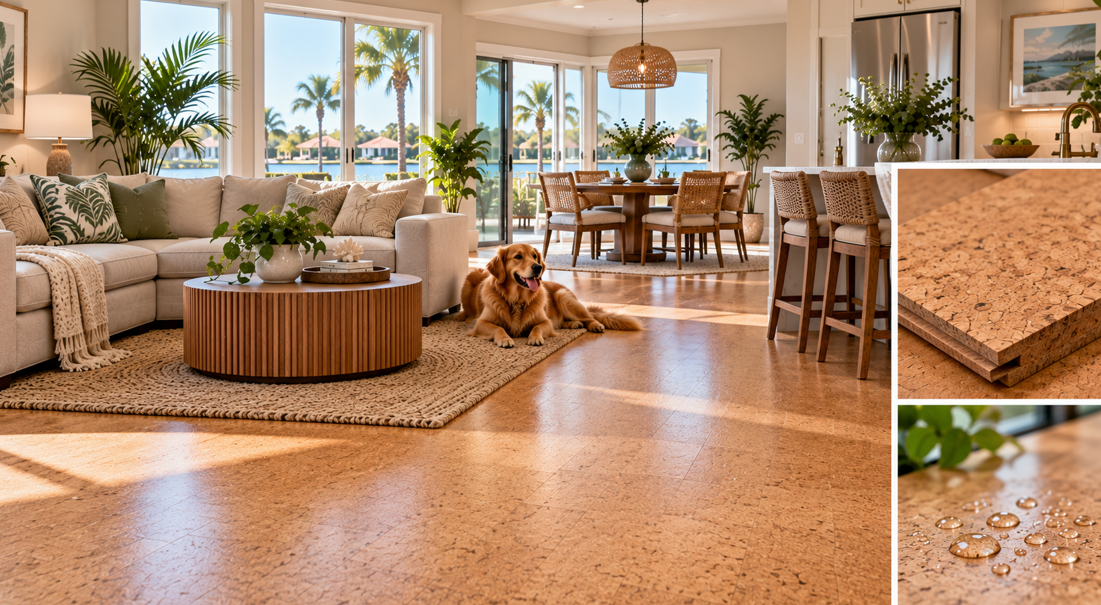
Cork flooring has a loyal following, and for good reason. It is soft underfoot, quiet, naturally warm and made from a renewable resource. Yet many homeowners in Lakeland hesitate because of one big question: can a natural material like cork handle Florida humidity?
At Williford Flooring, we have served Lakeland since 1946 from our showroom on Hwy. 98 North, and cork is one of the floors we carry and install. Here is an honest look at how cork performs in our climate and how to set it up for success.
What Is Cork Flooring?
Cork comes from the bark of the cork oak tree. The bark is harvested without cutting the tree down, and it grows back over time, which makes cork a renewable choice.
Most cork floors today are made as planks or tiles with a cork wear layer on top, often bonded to a stable core. They are finished with protective coatings that seal the surface.
Key features of cork include:
Comfort: A cushioned feel that is easy on feet and joints.
Sound reduction: Cork absorbs noise, which helps in busy households.
Natural insulation: It feels warm to the touch.
Resilience: Small dents often recover thanks to cork's cellular structure.
How Cork Responds to Humidity
Cork contains millions of tiny air-filled cells coated in a natural waxy substance called suberin. This structure gives cork a natural resistance to moisture and mold, which surprises many people.
That said, cork is still a natural material. In very humid conditions, it can expand slightly, and long exposure to standing water can damage it, especially at seams and edges. The finish and the core construction make a big difference.
In Central Florida, where humidity stays high all year and summer brings daily rain, cork performs well when a few conditions are in place.
Conditions That Help Cork Thrive
Steady climate control: Most Polk County homes run air conditioning much of the year, which keeps indoor humidity in a comfortable range. Cork does best in that steady environment.
Proper acclimation: Letting the planks adjust to your home before installation reduces movement later.
A quality finish: Sealed surfaces protect against spills. Some homeowners add extra coats of finish over time to keep the surface protected.
Moisture testing on slabs: Most local homes sit on concrete slabs. Our installers test slab moisture and recommend the right underlayment or barrier before laying cork.
Best Rooms for Cork in Florida Homes
Cork is a great fit for:
Bedrooms and nurseries, where softness and quiet matter.
Home offices and media rooms, where sound control helps.
Living rooms and family rooms with steady climate control.
Kitchens, for cooks who stand for long periods, as long as spills are wiped up promptly.
Cork is usually not the first choice for full bathrooms, laundry rooms or entries from the pool and lanai, where water is constant. A waterproof product often suits those spaces better.
To explore colors, textures and plank styles, take a look at our cork flooring collection.
Caring for Cork in a Humid Climate
Cork is low maintenance, but a few habits help it last:
Sweep or vacuum regularly to remove grit.
Wipe spills promptly with a damp, not wet, cloth.
Use felt pads under furniture and avoid dragging heavy pieces.
Use window treatments to limit strong afternoon sun, which can fade natural tones.
Keep indoor humidity steady, especially during the summer rainy season.
Cork Compared With Other Floors
If you are weighing cork against other options, here is a quick view.
Cork vs. hardwood: Cork is softer, quieter and warmer underfoot. Hardwood offers classic grain and the ability to be sanded and refinished many times.
Cork vs. luxury vinyl: Luxury vinyl is often fully waterproof and very scratch resistant. Cork offers a natural, eco-friendly material with superior comfort and sound control.
Cork vs. laminate: Laminate offers a budget-friendly wood look, while cork feels softer and quieter underfoot.
Many homeowners mix materials, using cork in bedrooms and living spaces and waterproof flooring in wet areas.
Design Ideas With Cork
Cork has come a long way in style. Beyond the classic speckled look, today's cork floors come in wood-look planks, soft neutral tones and richer, deeper shades. Light, natural colors pair beautifully with the bright, airy interiors many Florida homeowners love, while darker tones add warmth to a den or study.
Cork also works well with area rugs, natural fibers and warm wood furniture. Because it is quiet and comfortable, it suits open-plan homes where sound can travel, helping busy family spaces feel calmer and more relaxed.
Hurricane Season Considerations
From June to November, storms can bring heavy rain and occasional flooding. Like most natural floors, cork can be damaged by floodwater. Good drainage, sealed doors and quick cleanup after a leak help protect it. If your home is in a flood-prone spot, we can talk through options room by room.
The Value of Professional Installation
Cork performs best when it is installed correctly. Williford never subcontracts. Our in-house installers handle acclimation, slab testing, underlayment selection and finishing, so your floor is ready for Florida life from day one.
See Cork in Person in Lakeland
So, is cork a good fit for Florida humidity? With steady climate control, a quality finish and expert installation, the answer is yes for many rooms in your home. It brings comfort, quiet and natural beauty that few floors can match.
Visit our showroom at 4820 Hwy. 98 North, Suite 1, Lakeland, open Monday to Friday 9am to 5pm, with Saturday and evening appointments available. You can also request samples or try our online visualizer. Special financing is available too for qualifying projects.
Want to know if cork suits your rooms? Contact our team or call (863) 270-7388 for friendly, knowledgeable advice.


