


WHY HOMEOWNERS IN OLDER PLANT CITY HOMES FACE THE REFINISHING VS REPLACEMENT QUESTION
Older homes across Plant City often feature hardwood floors that have supported decades of family life, humidity cycles, seasonal storms, and everyday wear. Many were installed long before modern HVAC systems stabilised indoor moisture levels, which means those floors have expanded, contracted, cupped, and settled over the years.
Even when hardwood has stood the test of time, homeowners eventually reach a moment where they wonder whether refinishing will restore beauty and strength — or if replacement will deliver a better long-term solution.
Florida’s weather adds another layer to this decision. Moisture from storm seasons, occasional leaks, high humidity, and dramatic temperature swings all influence how hardwood ages. In homes with original character or historical charm, many residents want to preserve the look they love. Others are ready for wider planks, fresh tones, or a layout that suits an updated interior style.
Both refinishing and replacement offer valuable benefits. Refinishing keeps the existing character of the home intact while refreshing the surface. Replacement, on the other hand, opens the door to modern styles, advanced finishes, engineered durability, and design freedom.
This decision becomes easier when homeowners understand what their floors are capable of, what structural conditions exist beneath the surface, and how Florida’s climate affects long-term performance.
Plant City homeowners often turn to Williford Flooring Company Inc. for help navigating these options, knowing they’ll receive expert guidance backed by decades of hands-on experience.
UNDERSTANDING THE CONDITION OF YOUR EXISTING HARDWOOD
Before deciding between refinishing and replacement, the first step is a careful evaluation of the existing hardwood. Older floors often hide surprises beneath the surface — some manageable, some more complex — so understanding the condition of the wood helps lead to the best long-term choice.
One of the first considerations is the thickness of the wear layer. Solid hardwood typically allows multiple sandings over its lifespan, but floors that have been refinished several times may be too thin to sand safely again. Engineered hardwood varies depending on its construction and the thickness of its real wood surface.
Structural soundness also matters. Floors that feel bouncy, loose, or uneven may point to underlying subfloor concerns that refinishing alone cannot fix. Installers look for movement in the boards, squeaks, gaps, or boards that separate depending on the season.
Moisture exposure is another important factor. Past leaks, spills, or prolonged humidity can leave marks, warping, or softened wood. Some of this can be repaired with refinishing, while deeper damage may call for full replacement. Signs of mold or termite activity require professional assessment before choosing either option.
By understanding what exists beneath the current finish, homeowners can make confident choices about restoring or upgrading their hardwood floors for long-term beauty and performance.
WHEN REFINISHING IS THE BEST OPTION
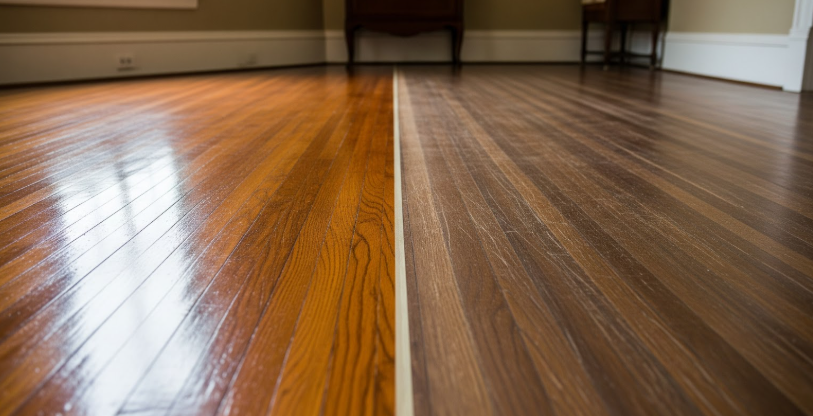
Refinishing can bring an older hardwood floor back to life, especially when the wood itself remains structurally solid. This option is ideal in cases where surface-level damage affects appearance but hasn’t compromised the integrity of the boards.
Scratches from daily foot traffic, fading from sunlight, dull or worn finish, and minor cupping are all common reasons homeowners choose refinishing over replacement.
Sanding gives the floor a fresh start by removing the top layer of finish and smoothing imperfections. Once the floor is sanded, new possibilities open up for design. Homeowners can shift from older reddish tones to warm naturals, contemporary neutrals, deeper espresso colours, or stylish matte finishes.
This flexibility helps older homes maintain their original character while still embracing updated design trends that fit Plant City’s classic-meets-modern aesthetic.
Refinishing is also an environmentally friendly choice because it extends the life of the existing wood rather than removing and replacing it. Many older homes feature hardwood species that are difficult or costly to source today, making preservation both practical and sentimental.
When the floor is thick enough, stable, and free from deep water damage or structural concerns, refinishing becomes a cost-effective, beautiful way to refresh a space without changing the hardwood itself.
For Plant City homeowners who appreciate the charm and history of their wood floors, refinishing keeps that character intact while restoring its elegance and durability.
WHEN REPLACEMENT MAKES MORE SENSE
There are cases where refinishing simply cannot deliver the results a homeowner needs. Replacement becomes the better long-term choice when the existing hardwood shows extensive structural wear or significant moisture damage.
Boards that are too thin to sand again, deep cupping or buckling, rotten areas, and termite damage all make replacement the more reliable path.
Replacement also offers opportunities to upgrade style, performance, and comfort. Modern hardwood flooring provides a wider selection of plank widths, species, installation patterns, and stains that better match today’s interior design.
Many homeowners choose replacement to shift from narrow oak strips to wide-plank designs, herringbone layouts, or engineered hardwood that handles Florida’s moisture cycles more effectively.
Engineered hardwood — with its layered construction and flexible performance — often performs exceptionally well in humid climates because it resists some of the natural movement seen in older solid floors.
Homeowners looking to enhance consistency, stability, and long-term durability frequently lean toward this option.
Major structural issues underneath the flooring also make replacement more appropriate. When the subfloor requires repair, or when moisture has traveled deeper than the finish, refinishing alone cannot address those problems.
Replacement ensures that every layer of the flooring system — from the subfloor to the wear layer — meets modern standards for stability and longevity.
For homeowners seeking a complete transformation, replacement opens the door to a more contemporary look, improved performance, and updated comfort that supports everyday living in Plant City.
HOW FLORIDA’S CLIMATE IMPACTS THE DECISION
Florida’s weather plays a major role in how hardwood floors age. High humidity, afternoon storms, warm temperatures, and fluctuating indoor cooling cycles all affect wood movement and long-term condition.
In older Plant City homes, where insulation and construction methods vary widely, hardwood floors often experience these effects more intensely.
Moisture causes wood to expand, while dry conditions cause it to contract. This natural breathing can lead to cupping, gapping, and seasonal changes that show up more prominently in older floors.
When hardwood has spent decades adjusting to Florida’s weather, it may become more sensitive to refinishing, especially if the boards are thin or unstable.
Replacement becomes the better choice in homes where climate-related swelling or warping has caused permanent distortion. Engineered hardwood, in particular, performs well in Florida's environment because its layered structure reduces movement compared to solid wood.
Refinishing still works beautifully when the wood remains structurally sound, and many Plant City floors respond well to sanding and resealing.
Modern finishes provide stronger protection against humidity and daily wear than older coatings often used decades ago. Whether refinishing or replacing, homeowners benefit from professional insight into how Florida’s climate interacts with each wood species and installation method.
COSTS, LIFESPAN & LONG-TERM VALUE
Hardwood flooring is an investment that brings both beauty and long-term value to a home. Choosing between refinishing and replacement involves understanding how each option holds up over time.
Refinishing extends the life of existing floors by restoring their surface and protecting the wood beneath. Solid hardwood can typically be refinished several times if the wear layer remains thick enough. Engineered hardwood varies depending on its construction, with some products offering a thinner surface that allows limited sanding.
Replacement provides the longest-term value in homes where the existing floor has significant structural issues or when homeowners want advanced finishes designed for durability.
Modern hardwood, especially engineered products, offers increased stability and resistance to everyday wear. When paired with a strong subfloor and professional installation, replacement creates a durable foundation that lasts for decades.
Assessing subfloor condition is also part of long-term value. If the subfloor requires repair, replacement ensures the entire flooring system performs at its best. Refinishing may refresh the look but cannot correct structural deficiencies underneath.
Whether the goal is preservation, modernisation, or full restoration, both refinishing and replacement serve as valuable investments when chosen based on the floor’s condition and the home’s climate demands.
STYLING CHOICES: WHETHER YOU REFINISH OR REPLACE
Hardwood flooring offers a world of design potential, whether homeowners refresh what they have or install something new.
Refinishing allows homeowners to reimagine the look of their existing floors through stain colour, sheen level, and modern tone choices. Many Plant City residents choose lighter neutrals, warm naturals, soft browns, or contemporary cool tones to freshen their interiors without replacing the wood.
Adjusting the sheen — matte, satin, or gloss — also affects the floor’s visual impact. Matte finishes create a soft, modern feel, while satin adds subtle shine. Refinishing can dramatically update the style of an older home while keeping its original charm intact.
Replacement offers even more design freedom. Homeowners can choose from wide-plank options, hickory, maple, engineered oak, exotic species, or patterns such as herringbone and chevron.
Engineered hardwood also provides a stable base for wider planks, which continue to be one of the most requested styles across Florida homes.
Both refinishing and replacement help transform interiors, restoring beauty and creating a cohesive look that enhances the home’s personality.
HOW PROFESSIONAL INSTALLERS HELP YOU CHOOSE THE RIGHT PATH
Hardwood decisions in older homes benefit from experienced installers who understand both the material and the environment.
Professionals evaluate thickness, stability, subfloor condition, species, and moisture levels before making a recommendation. Their insight helps homeowners understand what their floor can handle and what will deliver the best outcome long-term.
Choosing a team that handles all work in-house ensures consistency and care from start to finish. When refinishing, installers know how to sand appropriately for the wood species and how to apply finishes that stand up to Florida's humidity.
When replacing, they know how to prepare the subfloor, select appropriate moisture barriers, and install planks for optimal stability.
Homeowners who want guidance or want to begin planning a project can always reach out to us for friendly support and expert recommendations.


