


Why Cork Occasionally Lifts or Dents in Florida Homes
Cork remains a favourite among homeowners in Lakeland and Winter Haven because it’s comfortable, eco-friendly, quiet, and visually warm. But like any natural material, it can show signs of wear—especially in homes where humidity, foot traffic, and shifting temperatures play a role. When tiles begin lifting at the edges or dents appear in high-use spaces, it doesn’t mean the floor is failing. It simply means it needs the right care.
Homeowners exploring flooring options through Williford Flooring Company Inc. often appreciate cork’s unique benefits, but they also want to understand how to maintain and repair it when everyday life leaves a mark. Florida’s climate brings warm weather, occasional moisture, and steady activity in family homes, so learning how to fix lifting or denting helps extend the life of the floor.
Cork’s natural structure allows it to compress slightly under weight and bounce back, which is one of the reasons it’s so comfortable. But heavy furniture, improper installation, or humidity changes can slow down that recovery. The good news? Most issues—lifting edges, surface dents, sunken spots—can be repaired without replacing the entire floor. With the right techniques, your cork flooring can stay attractive, level, and resilient for years.
Common Causes of Lifting and Denting
Understanding the “why” behind cork problems makes repairs easier and prevents future issues.
Humidity & Moisture Exposure
Lakeland and Winter Haven homes experience seasonal humidity that can cause cork tiles to expand. When the tile expands more than the adhesive can support, corners may lift or bubble slightly.
Heavy Furniture Pressure
Cork is resilient but still compressible. If heavy furniture sits in one spot without protective pads, the pressure can leave dents or slow-recovering impressions.
Subfloor Issues
If the subfloor isn’t level or properly prepared, tiles may loosen over time and begin lifting, especially in high-traffic areas.
Adhesive Breakdown
Adhesive that doesn’t match Florida’s humidity can weaken sooner. When this happens, tiles begin shifting or separating.
Normal Wear Over Time
Even well-installed cork ages. Households with kids, pets, or active spaces may notice more dents simply from daily use.
How to Fix Lifting or Peeling Cork Tiles
Lifting is one of the most common repair needs, and it’s usually solvable without replacing large sections of flooring.
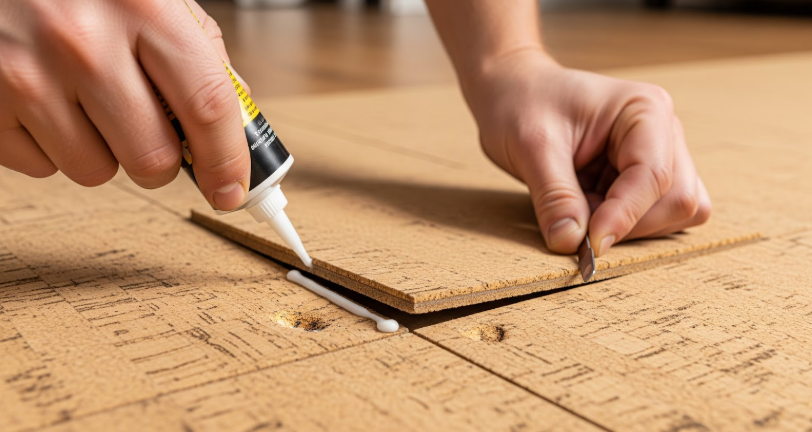
Re-Adhere Loose Tile Edges
If only the edges have lifted, the repair is straightforward:
Clean the lifted area to remove debris
Apply cork-safe adhesive under the loose section
Weigh the tile down until fully dry
This keeps the tile flat and prevents the lifted edge from catching on shoes or cleaning tools.
Replace Loose Adhesive Underneath
If moisture weakened the adhesive, removing the tile, cleaning the area, and applying fresh adhesive helps secure the tile for long-term performance.
Correct Surrounding Gaps
Sometimes nearby tiles shift slightly, causing one tile to lift. Realigning, re-adhering, and smoothing the area ensures the floor stays level.
Prevent Future Lifting
To keep cork stable in Florida conditions:
Use indoor humidity control during extreme seasons
Clean spills quickly
Avoid mopping with excess water
Choose adhesive designed for humid climates
Local homeowners often notice immediate improvement once the right adhesive and repair method are used.
How to Repair Dents or Sunken Spots in Cork
Cork’s natural softness makes it comfortable and quiet, but also susceptible to dents. Fortunately, most dents can be lifted or minimized.
Use Heat to Encourage Recovery
Cork expands slightly with warmth, making it easier for compressed areas to rise. Warm the dented spot with a hairdryer on low, then allow the cork to slowly expand back to its natural shape.
Apply Steam Carefully
A very light amount of steam can help deeper dents lift—but it must be used cautiously to avoid moisture damage. Controlled application encourages expansion and helps restore shape.
Replace Individual Tiles for Severe Dents
If a dent is too deep or damaged, replacing a single tile is often better than repairing. Because cork tile products are often consistent in size and style, a swap can look seamless when done carefully.
Protect Against Future Dents
To reduce denting in active homes:
Add felt pads to furniture
Use area rugs under heavy seating
Move furniture occasionally to distribute pressure
Avoid dragging items across the floor
When cork is protected, it maintains its springy feel and smooth appearance for years.
Fixing Gaps Between Cork Tiles
Gaps can appear when humidity causes tiles to shrink slightly or when installation conditions weren’t optimal. Repair steps include:
Cleaning debris from the gap
Re-adhering or adjusting the tile
Filling the gap with cork-safe filler for minor separation
Ensuring the subfloor is stable and level
Homeowners typically notice that once gaps are addressed, the flooring feels more solid and visually unified.
When Cork Tiles Need Full Replacement
While most issues are repairable, some situations call for replacing a tile or section:
Deep gouges or scratches
Water damage from long-standing spills
Severe adhesive failure
Large dents that cannot recover
Replacing a limited area is effective when the surrounding floor is still in strong condition. Cork transitions seamlessly when installed with care.
How to Prevent Cork Lifting and Denting in Lakeland & Winter Haven Homes
Proactive care helps cork maintain its beauty and structure—even in Florida’s climate.
Manage Indoor Humidity
Running air conditioning or dehumidifiers during high-humidity seasons keeps cork stable.
Use Proper Cleaning Techniques
Cork doesn’t need heavy soaking. A lightly damp mop and gentle cleaner are enough to maintain the finish.
Add Protective Pads Under Furniture
This prevents deep dents and preserves the surface.
Use Entry Mats
Keeping sand and moisture away from the floor prevents abrasion and swelling.
Choose High-Quality Adhesives
Florida-ready adhesives offer better long-term hold and moisture resistance.
With the right upkeep, cork stays resilient, comfortable, and visually appealing.
When to Call a Professional for Cork Repairs
Minor lifting and small dents are manageable DIY tasks. But homeowners often choose professional help when:
Multiple tiles are lifting
Gaps continue to return
Subfloor problems are suspected
Repairs need to match existing colour and pattern
The same tiles dent or lift repeatedly
Florida’s climate adds unique considerations, and professional installers know how to choose the right materials, adhesives, and repair methods for long-term performance.
Create a Space You Love With Beautiful, Long-Lasting Cork
Cork offers warmth, comfort, and style—qualities that make it a favourite in Winter Haven and Lakeland homes. When tiles lift or dent, repairs are usually simple and effective, restoring the floor’s beauty and resilience. Many homeowners find that exploring cork flooring options helps them understand what repairs are possible and when fresh materials might be the right choice.
If you’d like expert guidance or need help repairing your cork floors, you can always get in touch. A flooring specialist can help you restore your cork to its best shape or recommend long-lasting solutions tailored to your home.


