


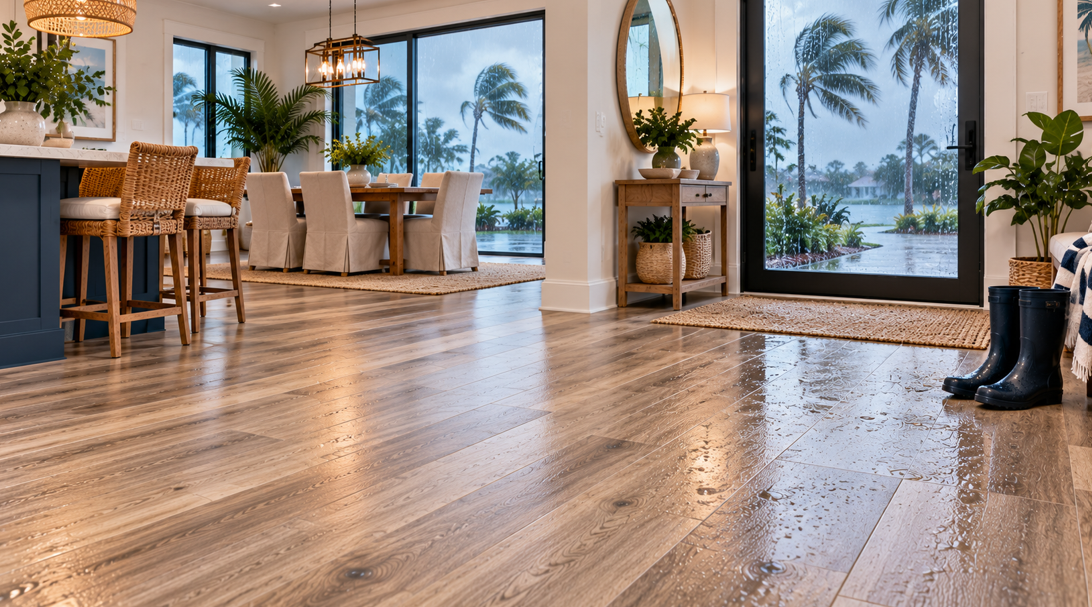
September is the heart of hurricane season, and every Sarasota homeowner knows the routine: check the shutters, stock up on supplies and keep an eye on the forecast. Flooring may not be the first item on your storm checklist, but it plays a big role in how quickly your home recovers from wind-driven rain, roof leaks or minor flooding. At Williford Flooring, we help Sarasota homeowners choose waterproof floors that stand up to Florida weather and make recovery easier when storms roll through.
Why Flooring Matters During Storm Season
Hurricanes and tropical storms bring heavy rain, high winds and power outages. Even when a storm does not cause major damage, water can find its way inside through doors, windows, roof vents and leaks. Carpet soaks up water and often needs to be pulled up. Solid wood can cup or buckle. Laminate with a fiberboard core can swell and fall apart.
Waterproof flooring changes that picture. Because the planks themselves resist water, they can often be dried, cleaned and kept in place after a minor water event, saving time, money and disruption.
What Makes a Floor Waterproof
Waterproof flooring uses materials that do not absorb water, such as vinyl and stone plastic composite cores. The most common options include:
Rigid core luxury vinyl plank. A stone plastic composite core gives these planks strength, stability and excellent water resistance. They look like wood and feel solid underfoot.
Waterproof luxury vinyl tile. Stone and concrete looks in a waterproof format, ideal for entries, bathrooms and kitchens.
Waterproof engineered products. Some newer products pair a real wood or wood-look surface with a waterproof core for added peace of mind.
It is worth knowing the difference between waterproof and water resistant. Waterproof planks will not swell or break down when exposed to water. Water-resistant products handle spills for a limited time but can suffer if water sits on them. For storm-prone homes, true waterproof flooring is the stronger choice.
You can browse our selection of waterproof flooring online to compare styles and colors.
Understanding the Limits
Waterproof planks protect themselves, but they cannot stop water from reaching what lies beneath. If standing water stays in a home for an extended period, it can still seep through seams to the slab below. Moisture trapped under the floor can lead to mildew if it is not dried properly.
That is why installation and recovery steps matter. A professional installer will check the concrete slab for moisture, use the right underlayment and leave proper expansion space. After a water event, removing a few planks along the walls to let the slab dry is often enough, and many click-lock planks can be reinstalled once the area is dry.
Best Rooms to Upgrade First
If you are upgrading in stages, start with the rooms most exposed to water during storms:
Entryways and foyers, where wind-driven rain can blow under doors.
Rooms with sliding glass doors, which often face pools and lanais and see rain blowing in.
Kitchens and laundry rooms, where appliance leaks can happen during power surges.
Ground-floor bedrooms and living areas, especially in lower-lying neighborhoods.
Running the same waterproof floor through the main level creates a seamless look and removes transitions where water could collect.
Preparing Your Floors Before a Storm
When a storm is approaching, a few simple steps can protect your floors:
Roll up and store area rugs in a high, dry spot.
Place towels along the bottom of doors that face the wind.
Move electronics and furniture with fabric bases off the floor where possible.
Make sure gutters and downspouts are clear so water drains away from the house.
Take photos of your floors for insurance records.
After the Storm
Once it is safe, remove standing water as quickly as possible with towels, mops or a wet vacuum. Run fans and, when power returns, your air conditioning or a dehumidifier to bring indoor humidity back down. Wipe floors with a mild cleaner to remove dirt and debris. If water stood for more than a day, call a flooring professional to check under the planks and assess the slab.
Style Without Sacrifice
Waterproof flooring no longer means giving up good looks. Today's products come in soft coastal oaks, rich walnut tones, whitewashed finishes and stone looks that suit everything from Sarasota's mid-century modern homes to new construction in Lakewood Ranch. Wide planks, realistic textures and matte finishes create floors that feel upscale and relaxed.
Installed by Our Own Team
Williford never subcontracts. Our in-house installers prepare the slab, test for moisture and install every plank with care, so your waterproof floor performs the way it is designed to when the weather turns.
Questions to Ask Before You Buy
Before choosing a waterproof floor, ask a few practical questions. Is the plank fully waterproof or only water resistant? How thick is the wear layer? Does the warranty cover water exposure, and what does it exclude? Can damaged planks be replaced individually? Does the product include an attached pad, and is it suitable for concrete slabs? Clear answers help you compare products fairly and avoid surprises later.
Insurance and Recovery Planning
Keep the product name, color and receipt for your new floor in a safe place, along with a few spare boxes of planks if possible. If a storm does damage part of the floor, having matching planks on hand makes repairs faster and keeps the room looking uniform. Photos taken before storm season also help with any insurance claim.
Get Ready for the Rest of the Season
Our Lakeland showroom at 4820 Hwy. 98 North is open Monday through Friday from 9am to 5pm, with Saturday and evening appointments available. Request samples, try our online visualizer and ask about special financing. We are here to help you choose waterproof flooring that keeps your Sarasota home ready for hurricane season.


