


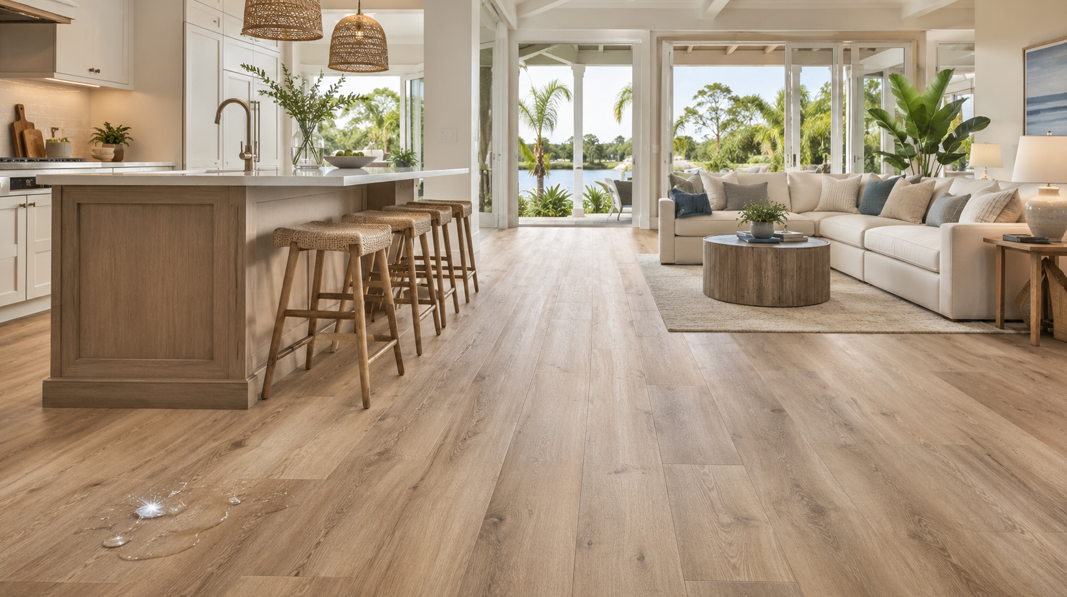
Why Waterproof Flooring Trends Still Matter in Lakeland and Plant City
Flooring trends can move quickly, but the best ones tend to stick around because they solve real problems as well as improve how a home looks. That’s especially true with waterproof flooring. What’s gaining attention in 2026 isn’t simply a new color palette or one fashionable plank size. The bigger shift is toward floors that combine better-looking visuals, more thoughtful construction, and practical performance for busy homes.
That matters in Central Florida. Lakeland and Plant City both see plenty of summer rain, and August is one of the wettest months on their long-term climate records. The 1991–2020 normals show 9.08 inches of August precipitation in Lakeland and 8.85 inches in Plant City. Wet shoes, pets coming in from the yard, kitchen spills, laundry-room drips, and everyday family traffic can all influence what homeowners expect from a floor.
At Williford Flooring Company Inc., those decisions are backed by local experience dating to 1946. The company’s flooring catalog includes waterproof options alongside hardwood, cork, and luxury vinyl, giving homeowners room to compare materials instead of choosing from a single category.
So, which 2026 waterproof flooring trends are worth watching? The strongest ones aren’t gimmicks. They’re warmer wood looks, more convincing textures, wider formats, better attention to rigid-core construction, and a greater focus on overall durability rather than the word “waterproof” alone.
Trend 1: Warmer, More Natural Wood Looks Are Taking Center Stage
For several years, cool gray flooring was everywhere. It worked well with the crisp white-and-gray interiors that dominated many remodels, but the market has been moving toward warmer, more natural visuals.
That doesn’t mean gray has disappeared. It means homeowners now have more options that feel softer and easier to live with over time.
Warm Neutrals Feel Flexible
Natural oak, honey, light brown, warm greige, and medium wood tones can work with a wide range of interiors. They pair comfortably with white kitchens, cream walls, natural wood furniture, darker cabinetry, and mixed-metal finishes.
For Lakeland and Plant City homes, that flexibility can be useful. Not every Florida home has a beach-inspired design. Some lean traditional, some farmhouse, some contemporary, and plenty mix styles from one room to the next. A warm neutral floor can help connect those spaces without demanding that the rest of the room follow one strict look.
Realism Matters as Much as Color
The 2026 resilient-flooring market continues to place strong emphasis on natural aesthetics, warmer color palettes, realistic wood visuals, matte finishes, texture, and greater visual variation. Industry reporting also points to wider and longer planks as manufacturers continue making resilient products look increasingly like natural wood.
That means it’s worth looking beyond the color name on a sample board. Pay attention to how much variation you see from plank to plank. Look at the grain, knots, shade changes, and whether the design repeats too obviously across a larger area.
A beautiful color can catch your eye in the showroom, but a convincing overall pattern is what helps the finished room feel polished.
Trend 2: Texture and Low-Gloss Finishes Are Raising the Bar
One of the most useful waterproof flooring trends is also one of the easiest to overlook: surface texture.
Modern waterproof floors can do more than print a wood pattern on top. Many collections now use embossing and detailed surface treatments that help the texture better match the visual underneath.
What Embossed-in-Register Means
You may see the term embossed-in-register, or EIR, while comparing flooring. In simple terms, it means the surface texture is designed to line up more closely with the visible grain, knots, and other details in the printed wood pattern.
Why does that matter? Because when the visual and texture work together, the plank can look more convincing from both standing height and up close.
Matte and Low-Gloss Finishes Feel More Natural
Highly glossy resilient flooring can reflect a lot of light, which may make the surface look more manufactured. Matte and low-gloss finishes tend to create a quieter, more natural appearance.
They can also fit comfortably into several popular design directions, from relaxed transitional rooms to cleaner contemporary spaces.
Current 2026 industry launches continue to feature ultra-matte surfaces, embossed-in-register textures, realistic bevels, reduced pattern repetition, and low-gloss finishes as manufacturers push waterproof and resilient flooring toward greater visual realism.
Don’t Judge a Floor From One Small Sample
A single plank can tell you the color and texture, but it can’t always show how the finished floor will read across an entire room.
When comparing options, look at several planks together if possible. Check them in natural daylight and evening lighting. Put a sample near your cabinets, trim, walls, and furniture.
A floor that looks perfect under showroom lighting may feel warmer, cooler, lighter, or darker at home. Taking that extra look can make the final choice feel much more confident.
Trend 3: WPC Is Back in the Conversation, While SPC Is Becoming More Quality-Focused
The letters WPC and SPC can make flooring shopping sound more technical than it needs to be. Both are common rigid-core constructions in the resilient flooring category, and both can appear in waterproof flooring products.
SPC, often called stone plastic composite or stone polymer composite, uses a dense rigid core. WPC, commonly referred to as wood plastic composite or wood polymer composite, uses a different type of composite core and often has a different feel underfoot.
Neither acronym tells you everything you need to know about quality.
Why WPC Is Getting Fresh Attention in 2026
WPC continues to gain attention in 2026 as manufacturers expand waterproof collections around comfort, realistic visuals, thicker constructions, and performance. Recent industry reporting also shows WPC outpaced SPC growth during 2025, although SPC remains the much larger rigid-core segment.
That’s an important distinction for homeowners. The trend isn’t “WPC good, SPC bad.” In fact, 2026 product development also shows manufacturers putting renewed emphasis on better-built SPC, improved consistency, stronger visuals, EIR textures, pressed bevels, and wider and longer planks.
The practical takeaway is simpler: don’t shop by acronym alone.
Look at the Whole Product
When comparing rigid waterproof floors, consider:
Overall construction and thickness
Surface or wear-layer specifications
Locking-system design
Edge and bevel details
Attached pad, when included
Approved rooms and installation methods
Manufacturer care instructions
Residential warranty terms
A product that sounds impressive in one specification can still be the wrong fit if the rest of its construction, installation requirements, or intended use doesn’t match your home.
Installation Still Has a Major Role
Even a well-made floor needs a suitable surface underneath it. Subfloor flatness, preparation, transitions, perimeter requirements, and manufacturer instructions can all affect how the finished floor performs.
That’s one reason Williford Flooring Company Inc.’s in-house installation approach matters. The work isn’t handed off to an outside subcontractor. A dedicated team can carry the project from product selection through installation with greater consistency.
Trend 4: Wider and Longer Planks Are Creating Cleaner Visuals
Waterproof flooring is no longer limited to short, narrow planks that immediately signal “resilient flooring.” Larger formats remain a major design direction in 2026, particularly as manufacturers push for more realistic hardwood-inspired visuals.
Current industry introductions include waterproof and resilient planks in wider and longer formats, with examples reaching 9-inch widths and lengths of 60 to 72 inches. These formats give manufacturers more room to showcase detailed grain, bevels, texture, and natural-looking variation.
Why Wider Planks Appeal to Homeowners
Wider planks can reduce the visual busyness created by many narrow boards. In an open kitchen and family room, that can help the floor feel more continuous from one area to the next.
Longer formats can also give the grain pattern more room to develop, which can help wood-look flooring appear more natural.
That doesn’t mean bigger is automatically better. Room size, furniture scale, cabinet color, installation direction, and the amount of pattern variation all matter.
A very wide plank with obvious print repetition can still look less natural than a slightly narrower product with stronger visual variety.
Think About the Whole Room, Not the Plank
Before choosing a wide or long format, picture it across the full space.
In a Lakeland open-plan home, a warm oak-look floor with long planks may help visually connect the kitchen, dining, and family areas. In a Plant City home with more traditional cabinetry, a medium-width plank with richer grain variation might feel more balanced.
This is where samples and room visualization tools become useful. Instead of chasing the biggest plank available, focus on proportion and how the pattern works with the architecture already in the home.
Homeowners who want to explore the styles, constructions, and finishes currently available can browse Williford’s selection of waterproof flooring before narrowing the choices for their own space.
Trend 5: Durability Is About More Than the Waterproof Label
“Waterproof” is an important feature, but it isn’t a complete durability rating.
A waterproof claim generally tells you something about how the flooring product itself is designed to respond to water under specified conditions. It doesn’t automatically tell you how well the surface will resist scratching, what happens to moisture that reaches the subfloor, whether the locking system is suitable for a particular installation, or what the manufacturer will cover after a major water event.
That distinction matters.
Match Durability to the Household
A home with two adults and light foot traffic has different flooring demands from a home with children, pets, frequent guests, and doors opening directly to a rainy backyard.
For homes with pets, look closely at manufacturer information about surface protection, cleaning, and scratch resistance.
For busy family spaces, prioritize products intended for regular residential traffic and finishes that suit the level of maintenance you’re comfortable with.
For kitchens and laundry rooms, moisture performance can be valuable, but quick cleanup still matters. A waterproof floor isn’t a reason to leave standing water or ignore an appliance leak.
For entry areas, mats and regular sweeping can help keep sand, grit, and outdoor debris from acting like abrasives underfoot.
Waterproof Flooring Doesn’t Waterproof the House
This is one of the most important expectations to get right.
A waterproof floor doesn’t necessarily waterproof the subfloor beneath it. Water may still reach edges, walls, transitions, or other building materials depending on the installation and the source of the moisture. A major plumbing leak or flood can create conditions that go far beyond what a flooring warranty is designed to cover.
That’s why it’s helpful to read the specific warranty and installation instructions for the product you’re considering.
In other words, the best durability trend is better-informed shopping. Instead of relying on one bold label, compare the entire flooring system and how it fits the way your household actually lives.
How to Choose a Trend That Won’t Feel Dated Too Quickly
Flooring usually stays in place much longer than paint colors, throw pillows, or cabinet hardware. It makes sense to enjoy current trends, but it also makes sense to choose one that can live comfortably with your home for years.
Start With the Room
Before thinking about color, ask practical questions.
Where will the floor go? How much traffic does the room get? Are there children or pets? Does the space connect to an exterior door? Are spills common? What cabinets, trim, and furniture are staying?
Those answers help narrow the field before design preferences take over.
Choose the Look Second
Once the practical needs are clear, compare the visual details:
Warm, cool, or neutral color family
Light, medium, or dark value
Smooth or textured surface
Matte or slightly higher sheen
Narrower or wider plank
Subtle or noticeable grain variation
If you love a trend but it clashes with everything you plan to keep, it probably isn’t the right trend for your project.
Compare Construction After You Find the Look
Once you have two or three visual favorites, compare their construction and manufacturer requirements.
Ask what type of core each product uses, where it’s approved for installation, whether an attached pad is included, what subfloor conditions are required, and what the warranty actually covers.
This order makes the process easier. You’re not comparing dozens of technical specifications across floors you don’t even like.
Use Samples in Real Lighting
Williford Flooring’s website lets shoppers browse products, use room-visualization tools, order samples, and request an estimate. Those tools can help narrow a long list before making a final decision.
Once you have a sample, move it around. Look at it in morning light, afternoon light, and under your normal indoor lighting. Place it beside cabinets and baseboards. If you’re flooring multiple connected rooms, check it in each one.
The best trend to follow is the one that looks right in your home and meets the performance needs of the people living there.
Bring Today’s Waterproof Flooring Style Into Your Home With Confidence
The waterproof flooring trends shaping 2026 matter because they’re about more than appearance.
Warmer wood visuals offer an inviting alternative to the cool-gray looks that dominated for years. Better embossing, matte finishes, and more natural bevels help resilient floors look more convincing. Wider plank formats can create a cleaner visual flow. At the same time, renewed interest in WPC and better-specification SPC has pushed the conversation toward construction quality instead of price or product labels alone. Current industry reporting supports this continued focus on WPC growth, SPC quality, natural aesthetics, and more realistic surface design.
For Lakeland and Plant City homeowners, that combination makes sense. Summer rain is a normal part of local life, but so are pets, kids, cooking, laundry, entertaining, and all the ordinary activity a floor handles every day.
The goal isn’t to find a product with the longest list of buzzwords. It’s to find flooring that looks beautiful in your space, fits your household, follows the manufacturer’s requirements, and is installed with care.
Williford Flooring Company Inc. has served the area since 1946, and its knowledgeable in-house team can help homeowners compare styles, construction types, samples, and installation considerations without turning the process into a guessing game. If you’re weighing waterproof flooring options for a Lakeland or Plant City home, get in touch to talk through what fits your space and your priorities.


