


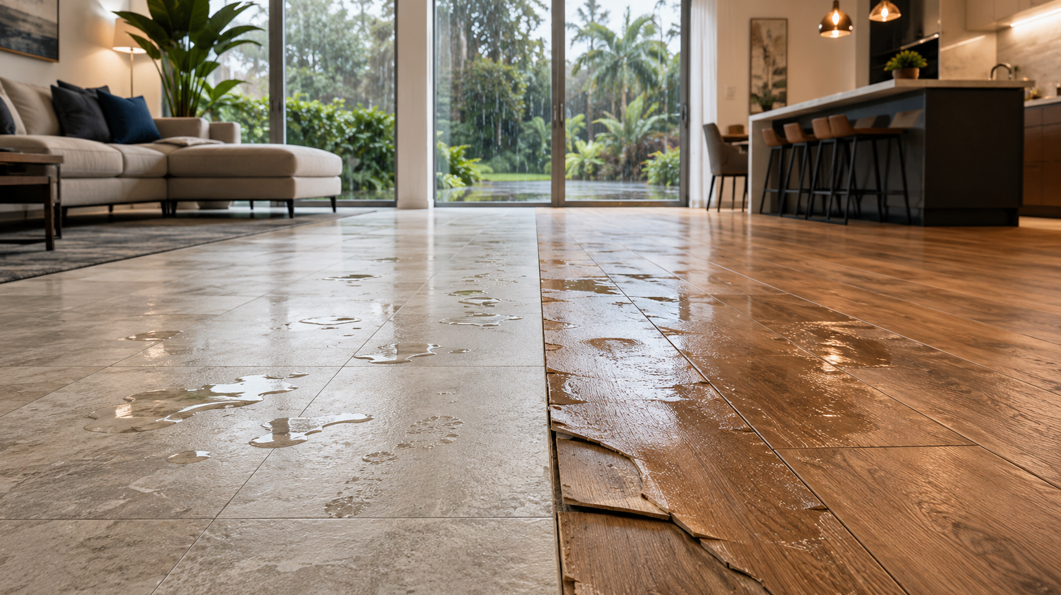
Why Moisture Protection Matters in Central Florida Homes
A spilled drink, a wet dog, muddy shoes, a leaking appliance, or rain tracked in from an afternoon storm can all expose a floor to moisture. In Lakeland and Plant City, those everyday incidents happen alongside high humidity, seasonal downpours, and an active hurricane season.
That makes terms such as “waterproof” and “water-resistant” sound especially important. The problem is that shoppers sometimes assume they mean the same thing.
They do not.
Water-resistant flooring can tolerate limited moisture for a certain period, depending on the product and manufacturer instructions. Waterproof flooring is designed to prevent water from penetrating the flooring material under specified conditions. Neither term means that an entire room is protected from flooding, mold, subfloor damage, or moisture entering around walls and cabinets.
Understanding that distinction can help homeowners choose flooring based on how a room is genuinely used rather than relying on a label alone.
Williford Flooring Company Inc. has helped Florida homeowners find beautiful, reliable flooring solutions since 1946. Its knowledgeable team can explain construction, warranties, installation requirements, and practical differences between products. Installation is completed by the company’s dedicated in-house crew, supporting consistent workmanship from preparation through the final details.
This guide explains how waterproof and water-resistant floors differ, where each option may work well, and what Lakeland and Plant City homeowners need to consider before selecting a material.
What Does Water-Resistant Flooring Mean?
Water-resistant flooring is designed to slow moisture penetration rather than block it indefinitely. It may handle splashes, light spills, damp cleaning, or water tracked in from outdoors when the moisture is removed within the manufacturer’s recommended period.
The exact level of protection varies widely.
One water-resistant product may allow a relatively generous cleanup window. Another may require spills to be wiped away quickly. Protection may also depend on whether water reaches only the finished surface or enters seams, perimeter gaps, damaged boards, or exposed edges.
Common water-resistant flooring categories may include:
Certain laminate products
Some engineered hardwood
Factory-finished hardwood with protective coatings
Selected cork flooring systems
Some vinyl products
Tile floors with moisture-sensitive grout or subfloor conditions
The material, core, locking system, finish, and installation method all influence performance.
Water Resistance Is Usually Time-Limited
The word “resistant” signals that a product can withstand some exposure, not unlimited exposure.
A small splash near a kitchen sink may not create a problem when it is cleaned promptly. Water left beneath a mat, around an appliance, or between flooring joints may create a different outcome.
Even when the visible surface looks dry, moisture can move into:
Seams between planks
Unsealed edges
Expansion spaces
Gaps near cabinets
Areas beneath appliances
Transitions between rooms
Cracks or openings near walls
For that reason, cleanup time matters. Homeowners benefit from reading the specific care and warranty information for the product they are considering rather than relying on a broad category description.
Water-Resistant Does Not Mean Fragile
A water-resistant floor is not automatically a poor choice. In many rooms, it can provide more than enough protection.
Bedrooms, formal living rooms, home offices, and dining rooms may have limited exposure to standing water. In these areas, appearance, comfort, durability, and maintenance preferences may matter more than the highest available moisture rating.
The better question is not, “Is water-resistant flooring good?” It is, “Does its level of protection match this room and household?”
What Does Waterproof Flooring Mean?
Waterproof flooring is built with materials that do not readily absorb water or lose their basic integrity when exposed under the conditions described by the manufacturer.
Luxury vinyl plank, luxury vinyl tile, and some rigid-core flooring systems are common examples. Certain products use waterproof cores, protective wear layers, and tight locking mechanisms to create a highly moisture-tolerant finished surface.
Waterproof construction can offer valuable protection in active Florida households, especially in rooms where spills, splashes, and damp conditions are more common.
Suitable applications may include:
Kitchens
Laundry rooms
Bathrooms outside wet shower areas
Mudrooms and entryways
Playrooms
Pet-friendly living areas
Selected commercial spaces
Ground-level rooms with greater moisture concerns
Still, the word “waterproof” needs context.
The Flooring Material May Be Waterproof Without the Room Being Waterproof
This is one of the most important distinctions for homeowners to understand.
A waterproof plank may not absorb water, but moisture can still move around or beneath the finished floor. Water may reach the subfloor through perimeter gaps, improperly sealed penetrations, damaged transitions, or areas where installation requirements were not followed.
Water may also affect:
Baseboards
Drywall
Cabinets
Adhesives
Underlayment
Wood subfloors
Concrete surfaces
Wall cavities
A waterproof floor can provide valuable surface protection, but it is not a flood-control system.
Waterproof Does Not Mean Damage-Proof
Flooring can be waterproof and still experience scratches, dents, discoloration, movement, heat damage, or problems caused by improper installation.
Waterproof performance also does not guarantee protection against moisture vapor rising from a concrete slab. Some products require testing, vapor barriers, approved underlayment, or specific adhesives before installation.
The product’s warranty and installation instructions define the protection more accurately than the front label alone.
Waterproof vs. Water-Resistant: The Main Differences
The clearest difference is the amount and duration of moisture exposure each product is designed to handle.
Moisture Exposure
Water-resistant floors are generally intended for occasional, limited contact with water. Waterproof floors are designed for greater exposure without the flooring material absorbing water in the same way.
That does not make standing water desirable on either type. Prompt cleanup remains the safest approach.
Core Construction
Many water-resistant products use wood-based or fiber-based cores protected by coatings, finishes, or tightly fitted joints. If water reaches the core, swelling, edge damage, or movement may occur.
Many waterproof floors use vinyl, polymer, or rigid composite cores that do not react to water like traditional fiberboard.
Construction varies by manufacturer, so the product specifications deserve close attention.
Seam Protection
A waterproof plank does not automatically create waterproof seams. Locking systems differ, and their effectiveness depends on correct installation.
If planks are not fully engaged or the floor is installed over an uneven surface, small openings may allow moisture to travel below the floor.
Water-resistant products may also use enhanced locking edges or treated seams, but their protection typically has more limits.
Cleanup Window
Water-resistant products often include a stated period for removing spills. Waterproof products may allow more time or tolerate longer exposure, although homeowners still gain little by leaving water on the floor.
The safest routine is simple: clean moisture as soon as it is noticed.
Room Suitability
Water-resistant flooring may work beautifully in lower-risk rooms. Waterproof flooring often provides greater reassurance in kitchens, laundry areas, bathrooms, and entryways.
Product selection still depends on the exact room. Flooring used near a bathroom vanity faces different conditions from flooring installed inside a shower.
How Lakeland and Plant City Weather Affects Flooring
Central Florida’s climate creates a combination of moisture concerns that homeowners in drier regions may not face as often.
High Humidity
Humidity can affect both the flooring and the materials beneath it. Wood-based products may expand and contract as indoor conditions change. Concrete slabs can also transmit moisture vapor even when there is no visible leak.
Air conditioning helps regulate indoor conditions, but temperature changes, open doors, vacant properties, and equipment problems can allow humidity levels to rise.
Flooring selection needs to account for both liquid spills and moisture in the surrounding environment.
Heavy Rain and Storm Activity
Summer storms can arrive quickly. Water may enter on shoes, umbrellas, pet paws, or equipment carried through the house.
Wind-driven rain can also find its way through damaged doors, windows, roofs, or exterior walls. In a major storm, water exposure may exceed the conditions covered by a flooring warranty.
Waterproof flooring can reduce concern about ordinary surface moisture, but storm-related water intrusion calls for inspection and complete drying.
Concrete Slab Conditions
Many Lakeland and Plant City homes are built on concrete slabs. Concrete may look completely dry while still releasing moisture vapor.
Before installation, a flooring professional may evaluate the slab, product requirements, and site conditions. Depending on the flooring system, preparation may include:
Moisture testing
Leveling uneven areas
Repairing cracks
Cleaning contaminants
Applying an approved moisture-control product
Selecting compatible underlayment or adhesive
Skipping proper preparation can undermine even a high-quality floor.
Indoor-Outdoor Living
Florida homes often connect living areas with patios, pools, lanais, gardens, and garages. That lifestyle brings more moisture and grit across the floor.
An entry from a pool area may benefit from different flooring than an upstairs guest room. Looking at traffic patterns helps determine where stronger moisture protection adds meaningful value.
Where Waterproof Flooring Makes the Most Sense
Homeowners do not necessarily need the same flooring performance in every room. Waterproof materials tend to offer their greatest benefit in spaces with frequent or unpredictable moisture.
Kitchens
Kitchens face spills, sink splashes, refrigerator supply-line problems, dishwasher leaks, and frequent cleaning.
A waterproof surface can provide more flexibility when everyday accidents occur. It also works well for households with children or pets, where spills may not be noticed immediately.
Laundry Rooms
Washing machines, utility sinks, hoses, and plumbing connections make laundry rooms higher-risk areas.
Waterproof flooring can tolerate ordinary drips and splashes, although a major appliance leak may still send water beneath the floor or into nearby walls.
Bathrooms
Waterproof floors are a practical choice around vanities, toilets, and bathtubs when the product is approved for bathroom installation.
The shower area requires separate consideration. A floor marketed as waterproof is not automatically approved for use inside a shower. Wet-area installations involve drainage, waterproof membranes, slope, approved materials, and detailed installation systems.
Entryways and Mudrooms
Rainwater, damp shoes, umbrellas, garden soil, and pet traffic make entryways natural candidates for stronger moisture protection.
A durable wear layer and easy-clean surface may be just as important as waterproof construction in these areas.
Pet-Friendly Rooms
Water bowls, accidents, wet paws, and routine cleaning can expose flooring to regular moisture.
A waterproof floor can simplify daily care, especially when paired with suitable scratch resistance and a finish that provides comfortable traction.
Commercial and High-Traffic Areas
Certain businesses benefit from flooring that handles frequent cleaning, tracked-in rain, and high foot traffic.
Product rating matters here. A floor suitable for residential use may not carry the same wear rating or warranty for a commercial setting.
Homeowners and business owners can explore waterproof flooring options designed to provide beautiful style alongside practical moisture protection.
Where Water-Resistant Flooring May Be Enough
Waterproof protection is valuable, but it is not automatically necessary in every room.
Bedrooms
Bedrooms usually experience fewer spills and less tracked-in rain. A water-resistant floor may provide suitable everyday protection while offering the appearance, warmth, or material character a homeowner prefers.
Home Offices
Most home offices have low moisture exposure. The more relevant concerns may be chair movement, sunlight, comfort, acoustics, and visual style.
Formal Living and Dining Rooms
These rooms can experience occasional spills, but they are not usually exposed to water as frequently as kitchens or bathrooms.
Prompt cleanup and routine care may make a well-selected water-resistant floor an appropriate option.
Upper-Level Rooms
Second-floor bedrooms, lofts, and hallways are generally less exposed to slab moisture and exterior tracking than ground-level entrances.
Plumbing risks still exist, but room use remains an important part of the decision.
Homes With Controlled Indoor Conditions
Consistent air conditioning, well-maintained plumbing, effective drainage, and prompt spill cleanup can reduce moisture exposure.
A flooring specialist can help compare those household conditions with the manufacturer’s performance requirements.
What Waterproof Flooring Cannot Prevent
The word “waterproof” can create unrealistic expectations unless its limitations are clearly understood.
Flood Damage
A floor may survive contact with water while the building materials beneath and around it do not.
Floodwater can contain dirt, bacteria, chemicals, sewage, and other contaminants. Even when planks appear reusable, the underlayment and subfloor may require professional evaluation.
Mold and Mildew
Waterproof flooring does not guarantee that mold cannot grow.
Mold needs moisture and an organic food source. Dust, wood, drywall paper, underlayment, and debris beneath a floor may support growth when water becomes trapped.
Drying the entire assembly matters more than drying only the visible surface.
Plumbing and Appliance Leaks
Waterproof materials can reduce surface damage from minor leaks, but a slow leak beneath a dishwasher, refrigerator, toilet, or washing machine may remain hidden.
Homeowners benefit from checking supply lines, shutoff valves, seals, and appliances as part of routine maintenance.
Moisture Vapor
Liquid water and moisture vapor are not the same. A waterproof surface may still require a moisture barrier or approved adhesive over concrete.
Testing and preparation help determine what the installation system needs.
Improper Installation
Uneven subfloors, incomplete locking joints, poor expansion spacing, incompatible adhesives, and unapproved underlayment can affect performance.
That is one reason professional installation has value. The finished floor depends on the quality of the surface beneath it and the care used during installation.
How to Compare Flooring Products Before Buying
Two boxes may both say “waterproof,” yet the products inside can differ in construction, finish, warranty, and approved use.
Read the Warranty Carefully
Look for details about:
Length of moisture exposure covered
Residential or commercial use
Flooding exclusions
Pet-related coverage
Bathroom limitations
Required perimeter sealing
Approved cleaning products
Installation over concrete
Moisture-testing requirements
Transferability of the warranty
A lifetime label may apply only to certain forms of product failure under specific residential conditions.
Ask About the Core
The core affects dimensional stability, feel, and moisture performance.
Common categories include:
Flexible luxury vinyl
Stone-plastic composite
Wood-plastic composite
Enhanced laminate cores
Engineered wood constructions
Each has its own advantages. A thicker or heavier plank is not automatically better for every property.
Review the Wear Layer and Finish
The wear layer protects the printed design and surface from routine use. For active households, scratch and stain performance may matter as much as moisture protection.
Finish texture also affects appearance, traction, and cleaning.
Confirm Approved Rooms
Check whether the product is approved for:
Kitchens
Full bathrooms
Laundry rooms
Below-grade spaces
Sunrooms
Commercial settings
Installation over radiant heat
Homes without continuous climate control
The approval list helps prevent using a product outside its intended setting.
Compare Full-Size Samples
A small sample may not reveal repeated patterns, plank variation, surface texture, or how seams look across a larger area.
Viewing several pieces together gives a more accurate picture of the finished floor.
Installation Details That Influence Moisture Performance
The best product cannot compensate for poor preparation.
Subfloor Flatness
Rigid flooring needs a sufficiently flat surface. Low areas, high spots, and abrupt changes can place pressure on locking joints.
Over time, movement may create gaps or weaken connections between planks.
Moisture Testing
Concrete moisture is not always visible. Testing helps determine whether conditions fall within the flooring manufacturer’s requirements.
Results may influence the choice of barrier, adhesive, underlayment, or product.
Expansion Space
Floating floors need room to expand and contract. Perimeter spacing is normally concealed by trim, but it still needs to follow product instructions.
Too little space may cause pressure and movement. Incorrectly treated edges may also affect moisture protection.
Transitions and Doorways
Transitions connect different floor types and accommodate movement between spaces. They also need secure, neat installation around areas where moisture may travel.
Perimeter Sealing
Some waterproof flooring warranties require flexible sealant or another approved detail in bathrooms, kitchens, or laundry rooms.
This does not convert the whole room into a waterproof enclosure. It supports the flooring system under the conditions defined by the manufacturer.
Everyday Care for Waterproof and Water-Resistant Floors
Good care extends the appearance and performance of either flooring type.
Clean Spills Promptly
Even waterproof floors benefit from quick cleanup. Moisture left on the surface may travel to walls, cabinets, vents, or other vulnerable areas.
Use Approved Cleaning Products
Harsh cleaners, abrasive tools, steam, waxes, and oil-based treatments may affect finishes or void warranty protection.
Follow the product’s care guide rather than using a one-method-fits-all routine.
Protect High-Risk Areas
Absorbent mats near entrances, sinks, pet bowls, and exterior doors can reduce tracked-in water.
Use mats with backings approved for the flooring. Some rubber or latex materials may react with certain finishes.
Inspect Appliances and Plumbing
Look periodically for moisture around:
Dishwashers
Refrigerators
Washing machines
Toilets
Sinks
Water heaters
Air-conditioning equipment
Catching a slow leak early protects more than the floor.
Control Indoor Humidity
Consistent indoor conditions support flooring stability and household comfort. Air-conditioning maintenance, ventilation, and dehumidification may help during Florida’s most humid periods.
Choosing the Right Protection for Your Home
Water-resistant flooring can handle ordinary moisture when exposure is limited and cleanup is timely. Waterproof flooring offers stronger protection because the flooring material is designed not to absorb water under specified conditions.
The right choice depends on:
The room
Household activity
Pet and child traffic
Slab or subfloor conditions
Plumbing exposure
Exterior access
Cleaning habits
Product warranty
Installation requirements
Preferred appearance and comfort
For a Plant City bedroom, water-resistant flooring may provide the ideal combination of style and performance. For a Lakeland kitchen, laundry room, or busy entryway, waterproof construction may offer greater confidence.
Neither label replaces proper subfloor preparation, careful installation, prompt cleanup, or maintenance. It also does not guarantee protection from flooding or hidden building damage.
Williford Flooring Company Inc. helps homeowners compare flooring based on real room conditions rather than marketing terms alone. Its experienced specialists can review product construction, finishes, moisture ratings, samples, and installation needs before work begins.
For personalized help choosing flooring for your Lakeland or Plant City property, reach out to us and discuss your space with the local team.


